 EN

What Should Buyers Know Before Ordering Living Room Rugs?
2026/11/02
Struggling to choose the right living room rugs? Avoid costly mistakes with expert insights on size, material, durability, style & care. Get your perfect rug.
Play mats for babies represent far more than just a soft place to sit. These specially designed surfaces serve as foundational tools for sensory development, offering infants and toddlers a safe environment to explore their world through touch. The question of whether play mats for babies truly encourage tactile exploration has a clear answer: when designed with appropriate textures, materials, and cushioning, they absolutely do. Understanding how these mats facilitate tactile discovery helps parents and caregivers make informed choices about early childhood development.
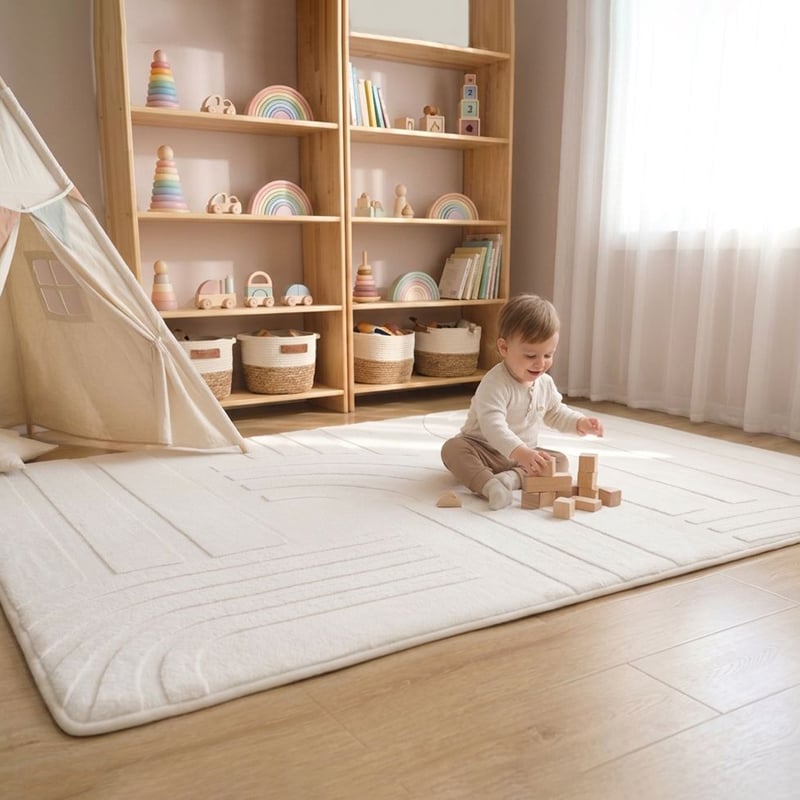
The development of tactile senses during infancy is critical for cognitive growth and motor skill advancement. Babies naturally learn through touch, and the right environment amplifies this instinctive behavior. A well-chosen play mat creates a dedicated space where tactile exploration occurs safely and continuously. This foundation of sensory input directly influences how children understand spatial relationships, textures, and cause-and-effect interactions as they grow.
Tactile stimulation toys and sensory surfaces activate the largest sensory organ in a baby's body: the skin. When infants interact with play mats for babies, they experience varied textures, temperatures, and pressure sensations. These inputs send signals to developing neural pathways, strengthening connections in the brain's sensory cortex. The process directly impacts hand-eye coordination, spatial awareness, and the foundation for fine motor skills that babies will need throughout their lives.
Cushioned baby flooring serves a dual purpose: comfort and safety. When babies lie on a cushioned surface, they feel supported without restricting movement, encouraging them to reach, grab, and explore freely. The padding absorbs impact as infants roll and move, building confidence to explore their environment more actively. This physical security allows the brain to focus on tactile input rather than stability concerns, making sensory exploration more effective and allowing tactile stimulation toys placed on the mat to capture full attention.
The best play mats combine multiple textures to maximize tactile stimulation toys integration. Soft faux fur, ribbed patterns, smooth sections, and slightly raised elements all contribute to a rich sensory landscape. Babies grasp different textures, press their faces against varied materials, and develop an understanding of material properties. This variety prevents habituation, keeping infants engaged longer and encouraging repeated exploration that strengthens tactile awareness and sensory processing skills.
Practical durability matters for sustained use and hygiene. An easy clean baby play mat made from wipeable, stain-resistant materials allows caregivers to maintain cleanliness without compromising the tactile quality parents and babies appreciate. Many cushioned baby flooring options feature removable, washable covers that preserve the mat's integrity while accommodating the mess that naturally accompanies early exploration. When mats remain hygienic and accessible, babies enjoy consistent, uninterrupted access to tactile exploration opportunities.
A non-slip baby mat prevents rolling hazards and keeps the play surface stable as infants move across it. Non-slip characteristics ensure that lightweight tactile stimulation toys remain positioned where placed, and the mat itself stays anchored during active play. This stability transforms the mat from a simple surface into a secure exploration zone. Babies feel the difference between a mat that shifts beneath them and one that provides reliable ground, and this predictability encourages more confident tactile exploration and risk-taking within safe boundaries.
Quality cushioned baby flooring meets rigorous safety standards designed to protect infants during their most vulnerable developmental stages. Non-toxic materials, secure stitching, and absence of small detachable parts are fundamental requirements. When caregivers select mats from reputable sources that prioritize safety compliance, they create an environment where tactile stimulation toys can be introduced with confidence. This safety foundation removes anxiety, allowing parents to focus on facilitating tactile exploration rather than worrying about hidden hazards.
The synergy between play mats for babies and thoughtfully selected tactile stimulation toys creates powerful learning moments. Placing textured toys directly on a cushioned surface allows babies to compare and contrast different materials. Crinkly objects, soft toys with varied textures, and safe tactile exploration aids combine with the mat's built-in sensory properties to create rich multi-sensory experiences. This layered approach intensifies engagement and extends the duration of focused tactile exploration during each play session.
Rotating tactile stimulation toys maintains novelty and prevents sensory habituation. When babies have constant access to the same toys on the same easy clean baby play mat, engagement naturally declines. Introducing new textures weekly or bi-weekly refreshes the exploration environment without requiring new equipment investment. This simple strategy maximizes the value of existing cushioned baby flooring and toys while honoring the developmental need for varied sensory input throughout infancy and early toddlerhood.
Yes, play mats for babies significantly contribute to sensory development when they offer varied textures, appropriate cushioning, and a safe exploration environment. Research consistently shows that tactile stimulation during infancy strengthens neural pathways associated with sensory processing and motor control. The combination of a quality cushioned mat and complementary tactile stimulation toys creates an ideal foundation for early learning and development.
An easy clean baby play mat features materials that resist staining and can be quickly wiped or washed without damage. Look for washable covers, non-porous surfaces, and designs that prevent liquid absorption. This practicality matters because families can maintain hygiene standards without removing the mat from circulation. When cleaning doesn't require extensive effort or downtime, babies enjoy consistent access to their tactile exploration space.
A non-slip baby mat provides stability that allows babies to focus entirely on tactile stimulation toys and surface textures rather than managing an unstable foundation. When the mat stays anchored during movement and play, infants develop confidence to explore more actively. This psychological security eliminates a distraction, permitting the developing brain to concentrate fully on processing tactile input and building sensory awareness during critical developmental windows.

2026/11/02
Struggling to choose the right living room rugs? Avoid costly mistakes with expert insights on size, material, durability, style & care. Get your perfect rug.

2026/11/03
Worried about infant falls during crawling? Discover how cushioned baby play mats absorb impact, and support motor development. Get expert safety tips now.

2026/11/04
Struggling with messy spills and tummy time needs? Discover waterproof, sensory, and tummy-time-optimized play mat surface. Compare materials now.

2026/11/05
Can a kids play mat reduce noise? Discover how thickness, foam density & full coverage deliver real acoustic relief. Get the guide.

2026/11/06
Why do kids slip on tile, laminate & polished wood? Discover how premium non-slip play mats anchor securely AND absorb impact. Boost safety.

2026/11/09
Tired of scrubbing stains and battling odors? Discover the 5 key kids play mat features—waterproof surfaces, washable covers, non-slip grip. See what makes maintenance effortless.

