 EN

What Should Buyers Know Before Ordering Living Room Rugs?
2026/11/02
Struggling to choose the right living room rugs? Avoid costly mistakes with expert insights on size, material, durability, style & care. Get your perfect rug.
Manufacturers today recognize that parents seek more than standard baby products—they want solutions tailored to their unique spaces, safety requirements, and aesthetic preferences. Customizing a playpen mat design involves balancing functional safety features with personalized visual appeal. Whether you're a manufacturer looking to expand your product line or a parent exploring specialized options, understanding how customization works reveals the complexity behind seemingly simple baby products.
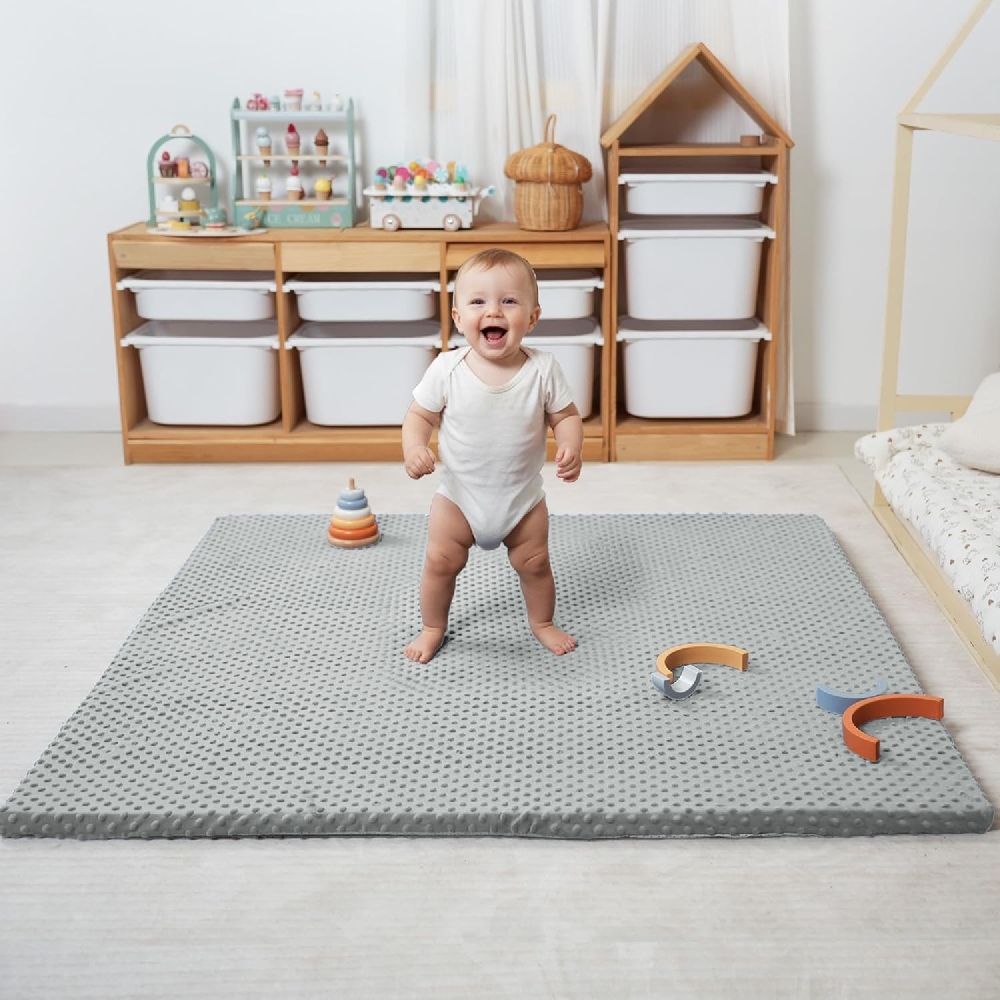
The customization process for a playpen mat encompasses multiple dimensions: material selection, dimensional adaptation, color and pattern choices, safety compliance integration, and functional enhancements. Each decision directly affects production complexity, cost, compliance timelines, and end-user satisfaction. Manufacturers must navigate the tension between production efficiency and customer-specific demands while maintaining rigorous safety standards that protect infants and toddlers.
The foundation of any customized playpen mat starts with material choice. Manufacturers select from premium fabrics, foam densities, and backing materials based on intended use, durability requirements, and maintenance expectations. A playpen mat designed for high-traffic daycare environments requires different material specifications than one intended for occasional home use. Dense foam cores provide superior cushioning and protection, while soft-touch textile surfaces balance comfort with washability. Customizing these specifications requires inventory management across multiple material suppliers and compliance verification for each variant.
Parents increasingly request playpen mat designs with sensory engagement elements—minky dot surfaces, embossed patterns, or varied textures that stimulate tactile development. Manufacturers can customize these features through specialized fabric sourcing, embossing processes, or appliqué applications. However, each texture variation demands unique production tooling, quality control protocols, and durability testing. A playpen mat with raised textures must still pass compression recovery tests and withstand repeated washing without pattern degradation. Manufacturers balance creative customization requests against the practical constraints of maintaining consistent product quality across production runs.
Different playpen designs require different mat dimensions. Rectangular playpens need longer mats than square models, while portable playpens require lightweight, compact folding options. Customizing a playpen mat for specific playpen dimensions involves pattern development, cutting equipment setup, and inventory segmentation. Manufacturers must maintain exact measurements because mats that don't fit securely pose safety risks and customer frustration. Creating custom sizing for niche playpen styles increases production complexity but meets specialized market demands. Each dimension variant requires separate pattern templates, quality verification procedures, and packaging configurations.
Parents have varying preferences regarding playpen mat thickness—some prefer minimal padding for portability, while others prioritize maximum cushioning for protection and comfort. Customizing thickness involves selecting appropriate foam densities, which affects both cost and performance. A thicker playpen mat provides superior impact absorption but increases shipping weight and storage requirements. Manufacturers develop tiered thickness options, allowing customers to select padding levels that match their specific needs and transportation constraints. Each thickness variation demands unique foam supplier relationships, compression testing parameters, and durability assessments.
Contemporary parents want playpen mat designs reflecting personal style—from neutral minimalist tones to vibrant educational patterns featuring animals, letters, or developmental milestones. Customizing colors and patterns requires coordination with fabric manufacturers, color fastness verification, and print stability testing. Dyes and printing processes must withstand frequent washing without fading or transferring. Manufacturers often develop seasonal collections or license specific character designs, adding complexity to production planning. Each playpen mat color or pattern variant requires separate inventory tracking, which impacts supply chain efficiency and stockkeeping challenges.
Customizing a playpen mat must never compromise safety compliance. Manufacturers integrate reinforced edge stitching, non-slip backing surfaces, and secure attachment points as standard features. When parents request specific customizations, safety requirements remain unchanged—no matter how unique the design, the playpen mat must meet international safety certifications including CPSIA and EN standards. Custom designs sometimes require additional safety testing if new materials or construction methods are introduced. Manufacturers must communicate clearly about which customizations affect safety performance and whether additional certification timelines apply.
Customizing a playpen mat design directly impacts production economics. Creating unique cutting patterns, embossing dies, or printing screens requires upfront tooling investment. Manufacturers typically establish minimum order quantities for custom playpen mat specifications to justify these setup costs. Small-batch customizations demand higher per-unit pricing unless volume commitments justify equipment investment. Understanding these economic constraints helps parents and retailers appreciate why fully custom playpen mat options carry premium pricing compared to standard designs.
Each customized playpen mat variant requires dedicated quality control testing. Manufacturers verify color consistency, pattern accuracy, dimensional precision, seam strength, and material integrity before shipment. Custom playpen mat batches sometimes undergo more rigorous inspection than standard products because variables increase with customization. Testing protocols ensure that personalized design elements don't introduce quality defects. Manufacturers must balance customization flexibility with production efficiency—offering maximum personalization while maintaining realistic quality assurance timelines.
Manufacturers typically offer customization across multiple dimensions: material composition (foam density and fabric type), dimensions (length, width, thickness), colors and patterns, texture features, backing options (non-slip treatment), and attachment methods. Some manufacturers provide additional services like custom character embroidery, personalized embroidery, or branded labeling. However, customization options vary by manufacturer—requesting a custom playpen mat should start with discussing specific requirements with your supplier.
Yes, customized playpen mat products typically carry higher costs due to tooling setup fees, smaller production runs, and extended design development timelines. Simple customizations like color selection add minimal cost, while extensive modifications involving material changes or pattern customization substantially increase pricing. Manufacturers often require minimum order quantities for custom playpen mat production to justify equipment investment. Understanding the cost factors helps buyers decide whether customization justifies premium pricing for their specific needs.
Production timelines for custom playpen mat designs depend on customization complexity, tooling requirements, and current manufacturing capacity. Standard design selections typically ship within 2–4 weeks, while extensive customizations may require 6–12 weeks for design approval, tooling creation, sample production, and quality verification. Manufacturers should communicate timeline expectations upfront so buyers can plan accordingly. Urgent custom playpen mat orders sometimes incur expedited production fees but may not be feasible depending on the nature of requested customizations.

2026/11/02
Struggling to choose the right living room rugs? Avoid costly mistakes with expert insights on size, material, durability, style & care. Get your perfect rug.

2026/11/03
Worried about infant falls during crawling? Discover how cushioned baby play mats absorb impact, and support motor development. Get expert safety tips now.

2026/11/04
Struggling with messy spills and tummy time needs? Discover waterproof, sensory, and tummy-time-optimized play mat surface. Compare materials now.

2026/11/05
Can a kids play mat reduce noise? Discover how thickness, foam density & full coverage deliver real acoustic relief. Get the guide.

2026/11/06
Why do kids slip on tile, laminate & polished wood? Discover how premium non-slip play mats anchor securely AND absorb impact. Boost safety.

2026/11/09
Tired of scrubbing stains and battling odors? Discover the 5 key kids play mat features—waterproof surfaces, washable covers, non-slip grip. See what makes maintenance effortless.

