 EN

What Should Buyers Know Before Ordering Living Room Rugs?
2026/11/02
Struggling to choose the right living room rugs? Avoid costly mistakes with expert insights on size, material, durability, style & care. Get your perfect rug.
Manufacturers seeking to expand their product offerings and capture growing market segments must understand how to customize weighted blanket designs effectively. The weighted blanket market has grown substantially in recent years, driven by increased awareness of sensory benefits and therapeutic applications. Customization allows manufacturers to tailor their weighted blanket solutions to specific customer needs, whether for pediatric use, adult relaxation, or specialized therapeutic applications. By mastering design customization strategies, manufacturers can differentiate their products, improve profit margins, and build stronger relationships with retail and direct-to-consumer channels.
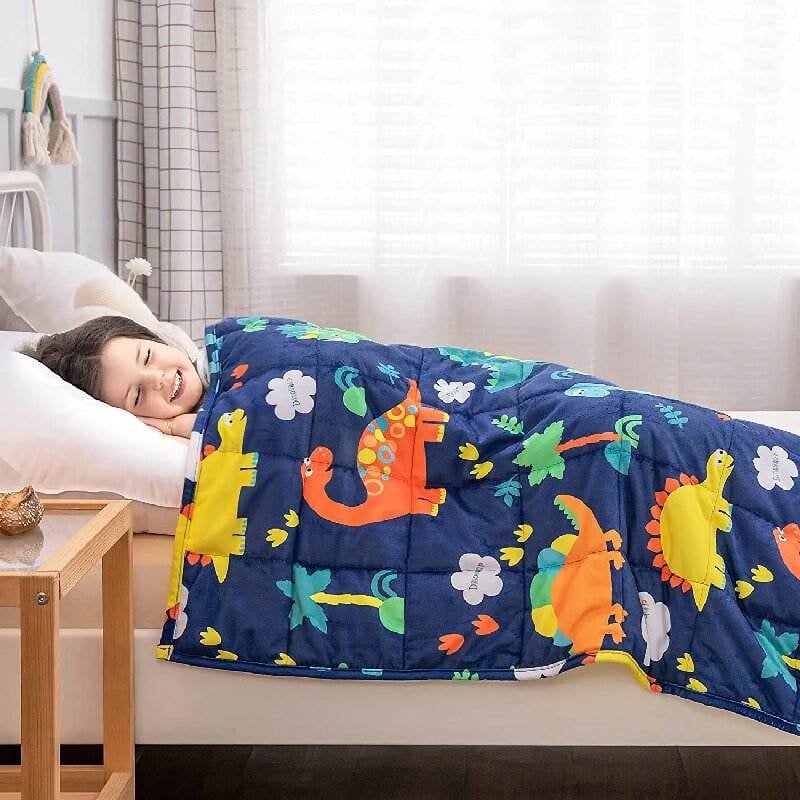
Successful weighted blanket customization goes far beyond simply changing colors or adding patterns. It requires understanding material selection, weight specifications, size variations, cover treatments, and construction methods. Smart manufacturers recognize that each customization decision impacts production costs, quality consistency, market positioning, and customer satisfaction. This comprehensive guide explores the key dimensions of weighted blanket design customization and provides actionable strategies for manufacturers to optimize their product lines.
The foundation of any weighted blanket lies in how weight is distributed and what materials carry that weight. Manufacturers can customize weight distribution by choosing between glass beads, plastic pellets, sand, or specialty materials, each offering different sensory profiles and price points. A quality weighted blanket typically uses uniformly distributed filling to prevent clumping and ensure consistent therapeutic benefits. Manufacturers can create multiple weight options within the same design—offering 7-pound, 10-pound, 15-pound, and 20-pound versions of an identical weighted blanket to appeal to different age groups and preferences. The pocket construction method significantly impacts customization flexibility; grid-based pockets allow manufacturers to vary weight density in different sections, enabling heated zones or graduated weight patterns tailored to specific therapeutic needs.
Cover fabric selection dramatically influences the perceived quality and appeal of a weighted blanket. Manufacturers can choose from cotton, minky, bamboo viscose, fleece, linen, or performance fabrics, each offering different tactile experiences and care requirements. Customizing a weighted blanket with premium fabrics like minky with embossed textures or cooling gel-infused materials creates market differentiation and justifies premium pricing. Surface treatments present another customization avenue—manufacturers can add embroidered patterns, printed designs, quilted textures, or specialty finishes that enhance aesthetic appeal without substantially increasing production costs. Many manufacturers successfully customize weighted blanket aesthetics by offering seasonal designs, character-themed covers for children, or corporate branding options for bulk wholesale orders. The choice between removable covers and fixed construction significantly affects maintenance ease and product longevity, making this a critical customization decision.
Standard weighted blanket sizes include twin, full, queen, and king dimensions, but manufacturers can customize dimensions for specialized applications. Pet-sized weighted blankets, travel-friendly compact versions, lap blankets, and weighted throws represent growing niche segments that command premium pricing. Manufacturers often customize weighted blanket dimensions to match specific bed frames or therapeutic applications—creating oversized models for larger individuals, shorter versions for children, or weighted blanket designs optimized for weighted vests or wraps. Production capabilities determine feasibility; manufacturers with flexible cutting and stitching systems can economically produce multiple size variants from standardized fabric rolls. Custom dimensions also enable manufacturers to develop application-specific products: weighted blankets designed for office use, therapy clinics, sensory rooms, or specialized care facilities can be optimized for their intended environment.
Customization extends to features that address particular user needs and therapeutic goals. For pediatric markets, manufacturers can add safety features like reduced weight ratios, hypoallergenic materials, and flame-retardant treatments. A weighted blanket designed for anxiety management might emphasize calming colors, ultra-soft covers, and gradual weight distribution, whereas one targeting athletic recovery could incorporate moisture-wicking fabrics and targeted cooling zones. Sensory-focused customization includes texture variety—manufacturers can create weighted blanket options with smooth satin covers, textured minky, bumpy embossings, or even weighted blankets with integrated aromatherapy pockets. Healthcare facilities increasingly request weighted blanket customization with infection-control features like hospital-grade antimicrobial treatments, waterproof liners, or simplified construction for easier cleaning and sanitization.
Smart manufacturers leverage modular production strategies to enable profitable customization of weighted blanket offerings. By standardizing internal construction components—pocket grids, filling materials, core layers—while varying external covers and finishes, manufacturers can achieve true customization without chaotic production complexity. This approach allows a manufacturer to offer dozens of weighted blanket variations while maintaining consistent core quality and managing inventory efficiently. Pre-assembled core units can be stored and paired with different covers on-demand, reducing lead times and enabling rapid response to market trends. The weighted blanket manufacturing process benefits significantly from this modularity; manufacturers can quickly launch new designs, seasonal variations, or customer-specific customizations without retooling entire production lines.
Customization introduces complexity that threatens quality consistency. Manufacturers must establish rigorous protocols to ensure that every weighted blanket variant meets weight accuracy standards, seam durability specifications, and material performance benchmarks regardless of customization variations. Implementing detailed quality checkpoints—verifying weight distribution, testing cover durability, inspecting seam integrity—becomes essential when producing multiple weighted blanket designs simultaneously. Batch testing and statistical process control help manufacturers maintain consistency across high-volume custom runs. Digital tracking systems enable traceability, ensuring that each weighted blanket variant can be traced back to production parameters, materials batches, and quality inspection results. This structured approach to customization protects manufacturer reputation and reduces returns or customer dissatisfaction stemming from quality inconsistencies.
Customization transforms a standard weighted blanket from a commodity product into a curated solution that resonates with specific customer segments. Manufacturers who offer thoughtfully customized weighted blanket options develop stronger customer relationships and command premium pricing compared to mass-market alternatives.The weighted blanket market increasingly rewards manufacturers who understand their target audience deeply and customize products to address specific pain points, whether that means sensory sensitivity for autism spectrum populations, anxiety management for mental health consumers, or sleep optimization for general wellness markets.
Bulk buyers—healthcare facilities, corporate wellness programs, therapeutic centers, and retail chains—represent significant revenue opportunities for manufacturers willing to customize weighted blanket designs for large orders. Offering minimum order customization, logo integration, or packaging options attracts these high-volume accounts and provides more predictable revenue streams than fragmented direct-to-consumer sales. A weighted blanket customized with healthcare facility branding, patient-specific care features, or institutional color schemes becomes a branded touchpoint within that organization. Manufacturers often discover that bulk customization projects drive efficiency improvements and cost reductions that benefit their entire weighted blanket product line. Building flexible manufacturing partnerships, maintaining modular production capabilities, and investing in design flexibility enable manufacturers to capture these lucrative bulk opportunities without sacrificing standard product quality.
Cover fabric selection, weight specifications, and size variations represent the most frequently requested customization options for weighted blankets. Customers increasingly demand minky or specialty fabrics, specific weight options tailored to age or body weight, and non-standard sizes. Color customization, embroidered personalization, and application-specific features like heated zones or cooling materials are also gaining popularity. Manufacturers who can offer these options with reasonable minimum orders and lead times capture significant market share advantage over competitors offering only standard weighted blanket designs.
Successful manufacturers employ modular production strategies where core weighted blanket construction remains standardized while external customization is applied at final assembly stages. This approach minimizes SKU complexity, reduces inventory carrying costs, and enables economies of scale on high-volume internal components. Strategic material sourcing, batch customization of covers, and negotiated minimums with fabric suppliers help manufacturers offer customization without dramatic cost increases. Pricing strategies should reflect the value of customization—customers expecting a weighted blanket tailored to their specific needs typically accept premium pricing, improving overall margin performance compared to commodity mass-market weighted blanket offerings.
Smaller manufacturers often outcompete larger competitors through superior customization capabilities and personalized service. While large manufacturers optimize for efficiency on high-volume standard weighted blanket production, smaller operators can focus on niche markets, rapid customization response, and unique design features. A small manufacturer offering highly specialized weighted blanket customization for therapeutic applications, specific communities, or unique aesthetic preferences can build loyal customer bases willing to pay premium prices. Partnerships with niche retailers, direct-to-consumer channels, and bulk institutional accounts allow small manufacturers to scale weighted blanket sales without matching large competitors' production volumes. Digital tools, outsourced manufacturing components, and efficient project management systems enable small businesses to offer customization complexity previously available only to large manufacturers.

2026/11/02
Struggling to choose the right living room rugs? Avoid costly mistakes with expert insights on size, material, durability, style & care. Get your perfect rug.

2026/11/03
Worried about infant falls during crawling? Discover how cushioned baby play mats absorb impact, and support motor development. Get expert safety tips now.

2026/11/04
Struggling with messy spills and tummy time needs? Discover waterproof, sensory, and tummy-time-optimized play mat surface. Compare materials now.

2026/11/05
Can a kids play mat reduce noise? Discover how thickness, foam density & full coverage deliver real acoustic relief. Get the guide.

2026/11/06
Why do kids slip on tile, laminate & polished wood? Discover how premium non-slip play mats anchor securely AND absorb impact. Boost safety.

2026/11/09
Tired of scrubbing stains and battling odors? Discover the 5 key kids play mat features—waterproof surfaces, washable covers, non-slip grip. See what makes maintenance effortless.

