 EN

What Should Buyers Know Before Ordering Living Room Rugs?
2026/11/02
Struggling to choose the right living room rugs? Avoid costly mistakes with expert insights on size, material, durability, style & care. Get your perfect rug.
Early childhood development represents one of the most critical phases in human growth, and the environment where infants spend their time plays a fundamental role in shaping their learning trajectory. Play mats for babies have emerged as essential tools in supporting this developmental journey by creating structured yet flexible spaces for exploration and discovery. These thoughtfully designed surfaces do far more than provide comfort; they serve as active learning platforms that engage multiple developmental domains simultaneously.
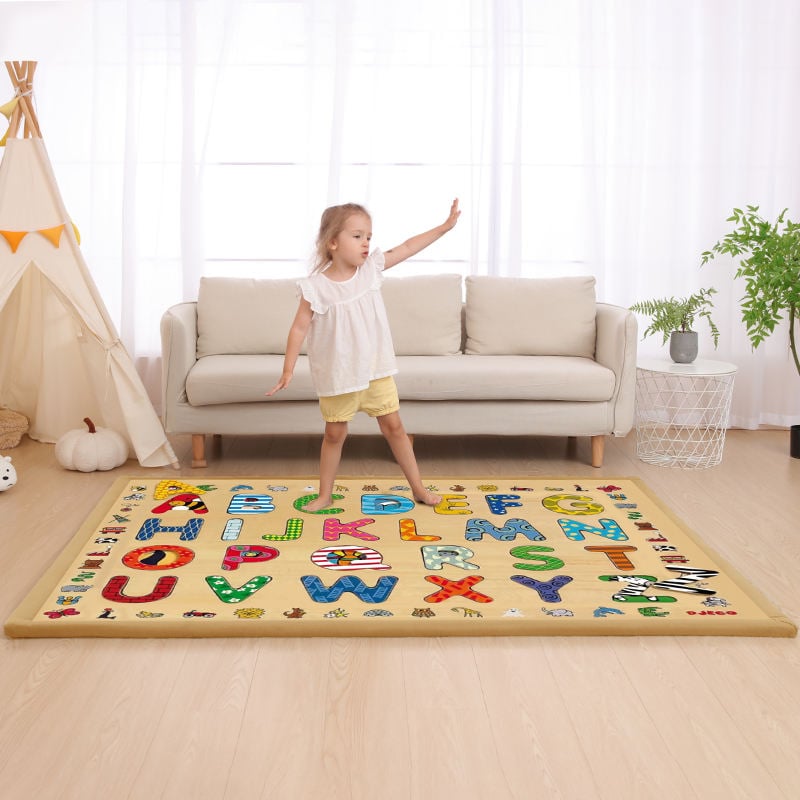
Play mats for babies create intentional learning environments where infants can safely explore their surroundings while developing crucial cognitive and physical abilities. From newborns to toddlers, these mats adapt to changing developmental needs, offering age-appropriate stimuli that encourage reaching, grasping, rolling, and eventually crawling. The combination of tactile elements, visual patterns, and interactive features transforms a simple surface into a comprehensive early learning tool.
Infants learn about their world primarily through visual input during the first months of life. Play mats for babies incorporate contrasting colors, patterns, and engaging designs that capture attention and encourage sustained focus. High-contrast patterns, particularly black and white combinations, stimulate neural pathways associated with visual processing and pattern recognition. As babies gaze at these elements, they begin forming connections between visual information and spatial understanding, laying groundwork for later learning skills.
The strategic placement of visual elements on play mats for babies encourages eye tracking and head control development. When infants follow moving objects or shift their gaze across different patterns, they strengthen eye muscles and develop coordination between vision and movement. This seemingly simple activity activates multiple brain regions simultaneously, promoting neural integration essential for cognitive advancement.
Texture variety on play mats for babies provides essential sensory input that builds tactile awareness and discrimination skills. Soft fabrics, bumpy surfaces, and varied textures encourage infants to touch, hold, and manipulate materials, sending sensory signals to the developing brain. This tactile engagement supports the formation of sensory maps in the brain, helping infants distinguish between different materials and understand their physical properties.
When babies interact with different textures during tummy time or supervised play, they develop fine motor control and hand strength gradually. The sensory feedback from touching various surfaces builds proprioceptive awareness, which is fundamental for coordinating body movements and understanding spatial relationships with their environment.
Play mats for babies serve as safe, defined spaces where infants naturally progress through developmental milestones involving large muscle groups. During tummy time on padded play mats, babies strengthen neck and shoulder muscles necessary for lifting their heads, eventually supporting upper body movement. The cushioned surface provides comfort while encouraging repetitive movements that build strength and endurance.
As infants mature, play mats for babies facilitate the transition from rolling to crawling by providing adequate space and supportive cushioning. The flat, open surface allows babies to practice weight shifting and coordination movements required for independent mobility. Parents observe clearer progression through developmental stages when babies have consistent, dedicated play mat time that encourages natural movement patterns.
Attached toys, crinkly elements, and interactive features on many play mats for babies specifically target fine motor skill development. As infants reach for, grasp, and manipulate these elements, they refine hand control and finger dexterity. The act of reaching develops shoulder stability, elbow control, and wrist flexibility necessary for future skills like eating and writing.
Play mats for babies with varied hanging toys encourage deliberate reaching and batting movements that strengthen arm muscles and improve hand-eye coordination. Babies learn cause and effect when their movements produce sounds or visual responses, motivating repeated practice and skill refinement through natural play engagement.
The familiar, designated space created by play mats for babies provides psychological comfort that supports emotional development. Infants feel secure within the defined boundaries of their play mat, allowing them to explore new movements and experiences with reduced anxiety. This sense of safety is fundamental for developing confidence in their physical abilities and willingness to attempt new developmental challenges.
Consistent use of play mats for babies establishes predictable routines that help infants develop emotional regulation skills. When babies associate their mat with playtime and exploration, they begin anticipating positive experiences, contributing to overall emotional wellbeing and secure attachment development.
Play mats for babies create natural gathering spaces where parents and caregivers can engage with infants during crucial bonding moments. These designated areas facilitate structured interaction time that supports language development, social awareness, and secure attachment formation. When caregivers spend focused time on the mat with babies, responding to their cues and encouraging exploration, infants develop healthy social expectations and communication skills.
Multi-infant play mat scenarios introduce babies to peer interaction in safe environments. As infants observe and eventually play alongside other children on communal mats, they begin developing social awareness and early collaboration skills essential for future peer relationships.
Newborns can begin using play mats for babies from birth, with supervised tummy time starting as early as a few weeks old. Parents should choose age-appropriate mats with gentle stimulation for newborns and gradually transition to more interactive designs as babies develop. Even young infants benefit from lying on padded surfaces during awake time, building foundation skills for later developmental progress.
Most pediatricians recommend multiple short sessions of play mat time throughout the day rather than prolonged single sessions. Play mats for babies work best when used for fifteen to thirty minutes during each tummy time or play session, distributed across several daily opportunities. The frequency and duration should increase gradually as babies develop strength and attention span.
While play mats for babies provide valuable learning opportunities, they work most effectively as part of a comprehensive approach to early development. Outdoor play, caregiver interaction, varied environments, and diverse activities complement mat-based learning. Play mats for babies serve as consistent foundational tools that support development alongside other enriching experiences and activities.

2026/11/02
Struggling to choose the right living room rugs? Avoid costly mistakes with expert insights on size, material, durability, style & care. Get your perfect rug.

2026/11/03
Worried about infant falls during crawling? Discover how cushioned baby play mats absorb impact, and support motor development. Get expert safety tips now.

2026/11/04
Struggling with messy spills and tummy time needs? Discover waterproof, sensory, and tummy-time-optimized play mat surface. Compare materials now.

2026/11/05
Can a kids play mat reduce noise? Discover how thickness, foam density & full coverage deliver real acoustic relief. Get the guide.

2026/11/06
Why do kids slip on tile, laminate & polished wood? Discover how premium non-slip play mats anchor securely AND absorb impact. Boost safety.

2026/11/09
Tired of scrubbing stains and battling odors? Discover the 5 key kids play mat features—waterproof surfaces, washable covers, non-slip grip. See what makes maintenance effortless.

