 EN

What Should Buyers Know Before Ordering Living Room Rugs?
2026/11/02
Struggling to choose the right living room rugs? Avoid costly mistakes with expert insights on size, material, durability, style & care. Get your perfect rug.
Parents often face a practical decision when setting up safe play spaces for their infants and toddlers: should they invest in a dedicated baby play mat or simply use a floor blanket? Both options serve the purpose of creating a designated play area, yet they differ significantly in construction, functionality, safety features, and long-term value. Understanding these distinctions helps parents make an informed choice that aligns with their child's developmental needs and household environment.
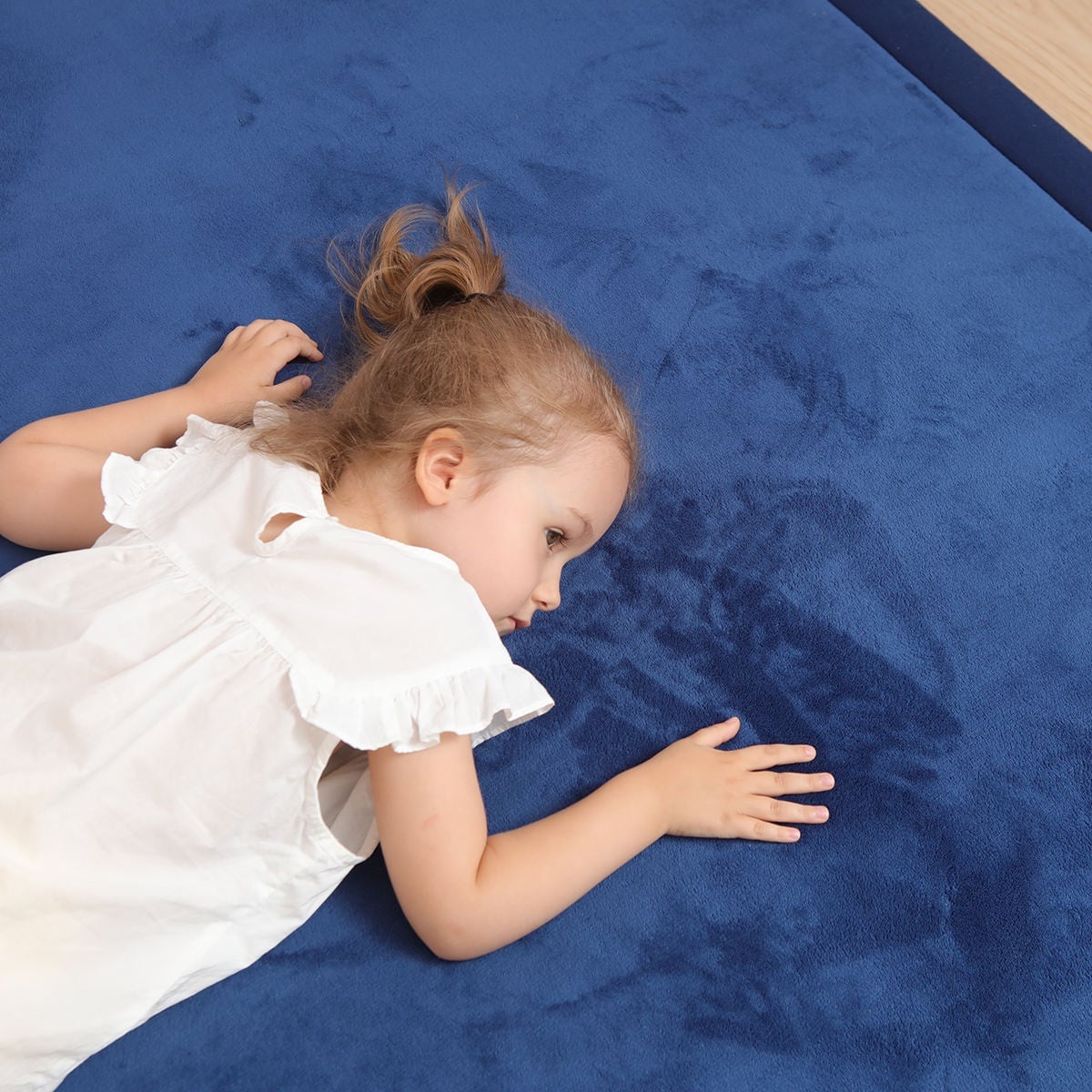
The primary distinction lies in how each product addresses cushioning, stability, and developmental support. A baby play mat typically features engineered foam construction, non-slip backing, and ergonomic design specifically engineered for infants and young children. Floor blankets, by contrast, are textile-based surfaces that prioritize softness and portability but may lack the structural support that growing children require during crawling, rolling, and early standing phases. This article explores the practical, safety-related, and developmental differences between these two options to help you select the most suitable play surface for your family.
A quality baby play mat incorporates multiple layers designed to deliver both comfort and stability. The foundation typically consists of dense foam—often 10–20 millimeters thick—that provides cushioning without excessive softness. This foam absorbs impact energy from falls and movements, protecting developing joints and bones. The top layer features a durable, skin-friendly fabric such as coral velvet or cotton blend, chosen specifically for safety standards compliance and machine washability. The base layer includes non-slip rubber or PVC backing that anchors the mat firmly to hardwood, tile, or carpet surfaces, preventing sliding during play. Additionally, many baby play mats feature reinforced stitching along edges and corner reinforcement to extend durability through years of active use.
Floor blankets are constructed primarily from textile materials such as cotton, fleece, or linen blends. These are typically single-layer or minimally padded fabrics without specialized foam inserts. While some premium floor blankets include thin batting for marginal additional softness, they lack the engineered cushioning system of a dedicated baby play mat. The bottom surface may have minimal grip treatment, often relying on fabric weight and friction to prevent movement. Floor blankets prioritize portability and aesthetic appeal over structural support, making them lighter and easier to transport than foam-based alternatives. However, this lightweight design means reduced stability when a child moves or plays actively on the surface.
The engineered foam in a baby play mat directly addresses the need for impact protection during developmental milestones. When infants transition from rolling to crawling and eventually standing, they experience numerous falls and tumbles.A child falling onto a floor blanket experiences nearly the same force as falling directly onto the underlying floor, particularly if the blanket is thin or loosely fitted. This distinction becomes especially significant in homes with stone, tile, or concrete flooring.
Stability during play is crucial for child safety and confidence. A baby play mat's non-slip rubber backing creates strong friction with flooring, keeping the surface stationary even when a child crawls, rolls, or pulls themselves upright on the mat's edge. This stability encourages safe exploration and reduces the likelihood of the surface moving unexpectedly beneath the child. Floor blankets typically lack robust anti-slip features and can shift during active play, potentially causing trips or disorientation. Parents using floor blankets often resort to temporary solutions such as tape or corner weights to improve stability, which is less effective than the engineered grip of a dedicated play mat.
A baby play mat designed for infant and toddler use typically withstands years of daily activity, from drooling and diaper incidents to spilled food and enthusiastic jumping. The reinforced stitching, quality foam that resists compression, and durable top-layer fabric ensure the play mat maintains its integrity and cushioning properties long-term. Constant friction from crawling and tumbling gradually thins the fabric, and the minimal or absent backing can separate from the top layer with repeated washing and use. The lifespan of a typical floor blanket is often 12–18 months of active use before noticeable degradation occurs, whereas a quality baby play mat can remain functional and safe for 3–5 years or longer.
Both baby play mats and floor blankets require regular cleaning due to the inevitable spills, accidents, and dirt exposure that accompany young children. Most quality baby play mats feature machine-washable top covers or fully machine-washable construction, with the foam core resistant to water damage and mildew. The foam in a baby play mat can be spot-cleaned or wiped down for quick maintenance between full washes, whereas floor blankets generally require full washing to maintain hygiene standards. For families with frequent spills, allergies, or multiple children, the faster turnover and easier spot-cleaning of a baby play mat often prove advantageous.
During the crawling phase, typically around 6–10 months, infants benefit from a surface that provides both cushioning and stability. A baby play mat's firm yet cushioned structure encourages confident crawling while protecting joints from impact. The mat's defined boundaries also help infants understand play space limits. Floor blankets, while soft, may be too pliant for optimal crawling development, potentially making movement feel unstable or encouraging poor crawling mechanics due to excessive surface give. The baby play mat's structure inherently supports better posture during this critical developmental phase.
As toddlers progress to standing and cruising along furniture, they pull themselves upright on play surfaces and nearby objects. A baby play mat's firmness and non-slip backing provide a reliable base for this phase. The edge stability of a play mat allows toddlers to safely practice weight distribution and balance. Floor blankets may shift or provide insufficient stability during these movements, potentially discouraging safe exploration or creating hazardous situations. The structural integrity of a baby play mat makes it more suitable for active toddler play involving standing, jumping, and dynamic movement patterns.
Floor blankets excel in households prioritizing portability and flexible use. Their lightweight construction makes them ideal for families who frequently move between rooms, travel to relatives' homes, or need temporary play surfaces. However, this portability comes at the cost of durability and protective features. Baby play mats, being heavier and more substantial, are better suited for permanent or semi-permanent play space setup. For parents who prioritize a dedicated, stable play zone where the child spends extended time, a baby play mat's fixed positioning offers superior developmental support and safety.
Floor blankets offer greater aesthetic variety, with countless fabric patterns, colors, and designs available to match interior décor. Families may view them as decorative elements when not actively in use. Baby play mats, while increasingly available in attractive designs, are more utilitarian in appearance and clearly identifiable as child-focused products. For parents concerned with maintaining interior style, floor blankets provide more flexibility. However, this aesthetic advantage should not override safety and developmental considerations when selecting a play surface for a young child.
While carpet provides more cushioning than hard flooring, a baby play mat still offers advantages even on carpeted surfaces. The baby play mat provides defined play space boundaries, additional targeted cushioning, and non-slip stability that carpeting alone cannot guarantee. The mat also prevents direct contact with carpet dust and potential allergens, and its contained surface simplifies hygiene management. For families with young crawlers and toddlers, the focused protection and stability of a baby play mat complement carpet without requiring replacement.
A floor blanket can work as a temporary or supplementary play surface, particularly for brief play sessions or in already-padded environments. However, for daily use during critical developmental phases—crawling, standing, and early mobility—a baby play mat provides superior cushioning, stability, and safety features specifically engineered for these milestones. If cost is a primary concern, a baby play mat represents better long-term value due to its extended lifespan and durability compared to floor blankets that degrade within 12–18 months.
Consider your household's flooring type, the child's developmental stage, frequency of use, and your lifestyle. Hard flooring surfaces demand the impact protection of a baby play mat, while families prioritizing portability and aesthetic flexibility may prefer floor blankets for supplementary use. If your child spends extended daily time on the play surface during crawling and standing phases, a baby play mat's engineered features provide measurable developmental and safety benefits. Evaluate durability needs—a baby play mat accommodates multiple children across years, while floor blankets suit temporary or secondary applications.

2026/11/02
Struggling to choose the right living room rugs? Avoid costly mistakes with expert insights on size, material, durability, style & care. Get your perfect rug.

2026/11/03
Worried about infant falls during crawling? Discover how cushioned baby play mats absorb impact, and support motor development. Get expert safety tips now.

2026/11/04
Struggling with messy spills and tummy time needs? Discover waterproof, sensory, and tummy-time-optimized play mat surface. Compare materials now.

2026/11/05
Can a kids play mat reduce noise? Discover how thickness, foam density & full coverage deliver real acoustic relief. Get the guide.

2026/11/06
Why do kids slip on tile, laminate & polished wood? Discover how premium non-slip play mats anchor securely AND absorb impact. Boost safety.

2026/11/09
Tired of scrubbing stains and battling odors? Discover the 5 key kids play mat features—waterproof surfaces, washable covers, non-slip grip. See what makes maintenance effortless.

