 EN

What Should Buyers Know Before Ordering Living Room Rugs?
2026/11/02
Struggling to choose the right living room rugs? Avoid costly mistakes with expert insights on size, material, durability, style & care. Get your perfect rug.
A baby play mat serves as far more than just a soft surface for your child to rest on. It functions as an essential developmental tool that actively supports multiple aspects of early childhood growth. From the moment infants begin exploring their environment, a baby play mat creates a dedicated, safe space where they can engage in the sensory experiences and physical movements that fuel their development during these crucial first years.
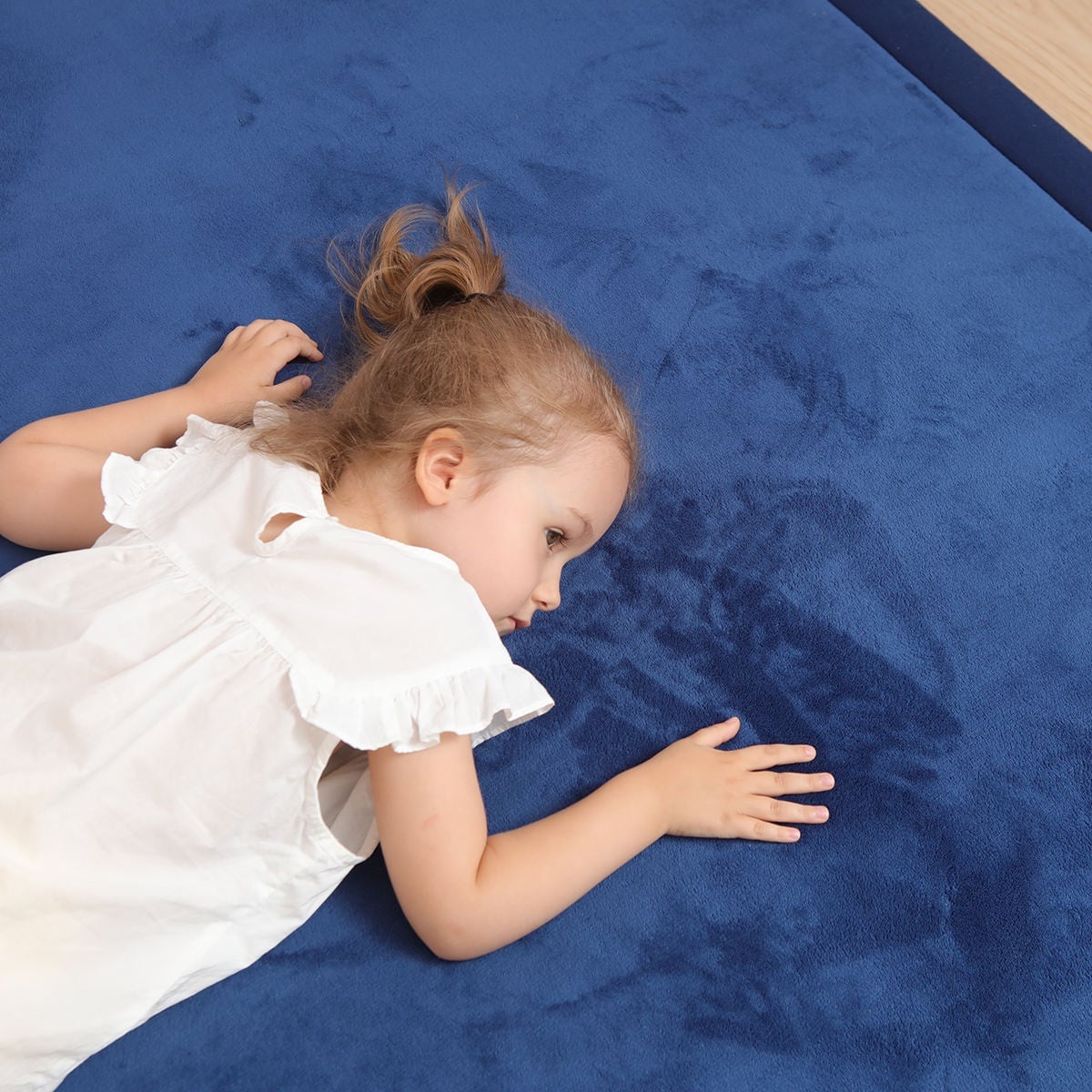
Understanding how a baby play mat contributes to development requires examining the connection between environmental design and early learning outcomes. Developmental experts recognize that infants and toddlers learn through direct physical interaction with their surroundings. A well-designed baby play mat provides the optimal platform for this critical learning process, offering both safety and sensory richness that directly addresses developmental milestones during infancy and early toddlerhood.
The texture variety found on a quality baby play mat directly stimulates tactile development. Infants learn about their world primarily through touch, and different fabric surfaces teach them to distinguish between sensations. Soft velvet, textured patches, and varied materials engage the sensory receptors in a baby's hands and skin, creating neural pathways that support cognitive development. This sensory input during the first year of life builds foundational understanding of texture discrimination, which later supports learning, creativity, and problem-solving abilities.
Many baby play mats include visual elements and sound components that stimulate auditory and visual development. Bright colors encourage focusing and tracking skills, while gentle sounds introduce babies to auditory patterns and rhythm. These multi-sensory elements work together to strengthen the neural connections responsible for perception and attention. When infants engage with these features on their play mat, they develop foundational skills that support language acquisition and cognitive processing throughout early childhood.
A baby play mat provides the safe, supportive surface needed for practicing fundamental gross motor skills. During the first months, babies develop head control, rolling, and eventually crawling on the cushioned support a play mat offers. The mat's thickness and padding reduce the risk of impact injuries while babies practice these essential movements. As children progress from rolling to sitting and crawling, the stable surface of a baby play mat encourages repeated practice, which is essential for building the strength and coordination needed for walking and running later in development.
Fine motor development accelerates when babies interact with elements designed into their play space. Reaching for toys placed on a baby play mat, grasping different textured surfaces, and manipulating attachable elements all strengthen hand-eye coordination and finger dexterity. These small movements build the muscle memory and neural coordination required for future skills like writing, drawing, and self-feeding. A baby play mat that includes age-appropriate interactive elements supports progressive fine motor challenges as the child develops.
Safety is foundational to healthy development, and a baby play mat creates a defined, supervised space where exploration can happen safely. The padded surface cushions falls and reduces injury risk during the inevitable tumbles that accompany learning to move. This safety foundation allows babies to take developmental risks with confidence, learning through trial and error without the fear factor that injury risk creates. Parents and caregivers can observe and support developmental progress while knowing their child is protected on the mat's secure surface.
When babies repeatedly succeed at movements and exploration within the safe confines of a baby play mat, their confidence grows. This growing self-assurance directly supports psychological development and motivation to attempt new challenges. A baby play mat essentially serves as a confidence builder, allowing children to master new skills repeatedly until those skills become automatic. This cycle of mastery builds intrinsic motivation and resilience, supporting both immediate developmental progress and long-term learning attitudes.
Developmental milestones mark the expected progression of physical and cognitive abilities, and a baby play mat directly facilitates achievement of these milestones. The appropriate surface firmness, adequate space, and strategic placement of interactive elements all contribute to an environment where babies naturally progress toward expected developmental goals. By three to four months, tummy time on a play mat builds neck and shoulder strength. By six months, the space encourages sitting practice. By nine to twelve months, the environment supports crawling and standing attempts. This natural progression supported by the right environment accelerates healthy development.
A quality baby play mat adapts to changing developmental needs as children grow. Newborns benefit from the gentle cushioning and sensory elements, while toddlers use the same mat for more active play and exploration. This adaptability makes a baby play mat a long-term developmental investment rather than a temporary convenience. As children's skills develop, parents can introduce new challenges and toys on the familiar play mat, creating continuity while supporting progressive learning.
Babies can benefit from a baby play mat from birth, particularly during tummy time sessions recommended by pediatricians. Newborns benefit from the supportive surface and visual elements that encourage focus. As babies grow, the mat becomes progressively more valuable for supporting rolling, sitting, crawling, and early standing practice. Most parents find a play mat most actively used between three months and two years, though older toddlers continue to enjoy active play on the mat.
A baby play mat offers specialized design features that regular flooring cannot provide. The cushioning is engineered to absorb impact while maintaining firmness for proper spinal support during development. The material selection prioritizes skin safety and includes washable fabrics for hygiene. Many mats include integrated sensory elements, textures, and interactive features designed specifically for developmental support. The defined boundaries of a play mat also create a clear safe zone for parents supervising their child, reducing monitoring stress compared to unrestricted home space.
While a baby play mat creates an optimal environment supporting healthy development, it cannot independently prevent delays caused by biological or health factors. What it does accomplish is providing consistent, appropriate sensory input and safe practice space that supports typical development progression. Many developmental specialists recommend play mats as part of comprehensive early development support. If you have concerns about your child's development, combining a supportive play environment with professional assessment ensures you address any potential delays comprehensively.

2026/11/02
Struggling to choose the right living room rugs? Avoid costly mistakes with expert insights on size, material, durability, style & care. Get your perfect rug.

2026/11/03
Worried about infant falls during crawling? Discover how cushioned baby play mats absorb impact, and support motor development. Get expert safety tips now.

2026/11/04
Struggling with messy spills and tummy time needs? Discover waterproof, sensory, and tummy-time-optimized play mat surface. Compare materials now.

2026/11/05
Can a kids play mat reduce noise? Discover how thickness, foam density & full coverage deliver real acoustic relief. Get the guide.

2026/11/06
Why do kids slip on tile, laminate & polished wood? Discover how premium non-slip play mats anchor securely AND absorb impact. Boost safety.

2026/11/09
Tired of scrubbing stains and battling odors? Discover the 5 key kids play mat features—waterproof surfaces, washable covers, non-slip grip. See what makes maintenance effortless.

