 EN

What Should Buyers Know Before Ordering Living Room Rugs?
2026/11/02
Struggling to choose the right living room rugs? Avoid costly mistakes with expert insights on size, material, durability, style & care. Get your perfect rug.
Tummy time is one of the most important developmental activities for infants, and a properly designed tummy time mat plays a crucial role in supporting healthy infant growth. During the first months of life, babies need regular time on their stomachs to develop the muscles and coordination necessary for rolling, crawling, and eventually walking. A quality mat provides the safe, comfortable foundation that makes this essential developmental practice both effective and enjoyable for your baby.
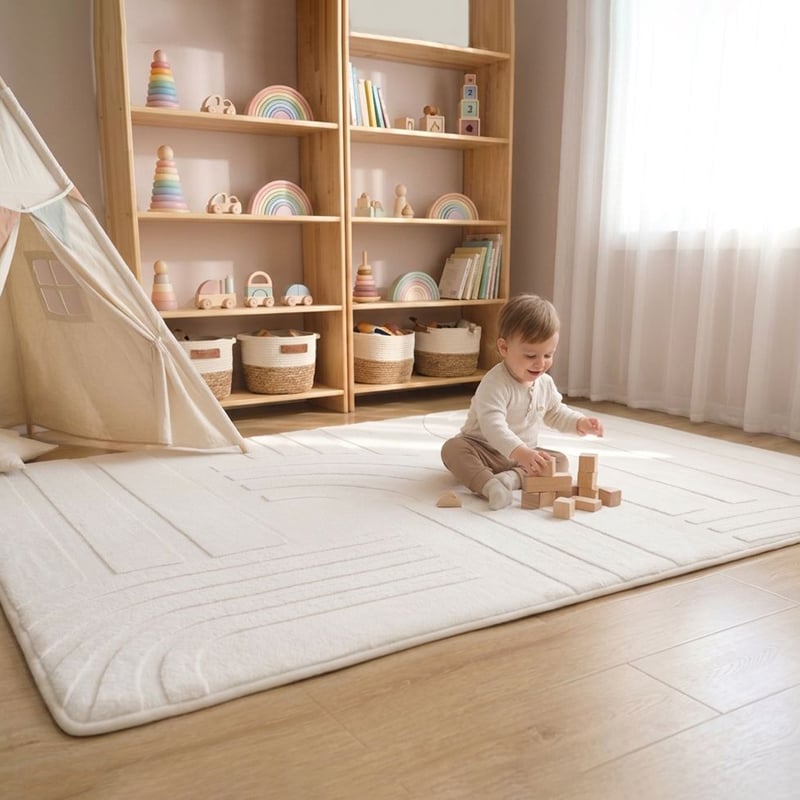
Parents often wonder how much impact the right equipment can have on their child's developmental journey. The answer is significant. A tummy time mat isn't just a soft surface; it's an investment in your infant's physical development and confidence. The right mat encourages longer, more frequent sessions by providing comfort and support, which directly translates to stronger neck muscles, improved head control, and accelerated gross motor skill development.
When infants spend time on a quality tummy time mat, they actively engage their neck, shoulder, and core muscles. This engagement is fundamental to infant growth and development. Young babies initially lack the strength to lift their heads or push themselves forward, but repeated tummy time sessions on a supportive mat gradually build these critical muscles. The soft, cushioned surface of a tummy time mat provides enough comfort that babies tolerate longer sessions, which means more opportunities for muscle development.
By around two to three months, babies begin lifting their heads more consistently during tummy time. A well-designed mat gives them the perfect platform to practice this movement safely. The mat's firmness matters considerably because if the surface is too soft, babies struggle to gain leverage; if too hard, they become uncomfortable quickly. This balance is why choosing the right tummy time mat directly supports your infant's ability to meet developmental milestones on schedule.
Regular tummy time on a supportive mat also reduces the risk of plagiocephaly, commonly known as flat head syndrome. When babies spend extended periods on their backs, the constant pressure on one spot can flatten the back of the skull. A tummy time mat encourages babies to spend significant time in a different position, distributing pressure more evenly and promoting healthier head shape as the skull develops. This preventive benefit makes the tummy time mat not just helpful for motor development but also essential for overall infant health.
Infant growth depends on a sequence of motor skill achievements, and tummy time is where many of these milestones occur. Once babies develop adequate neck strength, they begin reaching for toys and pushing against the mat's surface. A quality tummy time mat encourages this exploration because its texture and firmness make movement feel rewarding. As babies push, reach, and eventually roll, they're building the neuromuscular connections necessary for more complex movements later.
Rolling typically emerges around four to six months of age, and it's a major developmental milestone. The tummy time mat provides the ideal training ground for this skill because it offers enough surface area for babies to practice the weight shifts and muscle coordination rolling requires. When infants experience success on a supportive mat, they gain confidence and motivation to continue practicing, leading to faster skill acquisition and greater overall infant growth.
By six to eight months, many infants begin crawling or scooting, and tummy time remains critical for building the strength and coordination this milestone demands. A properly padded tummy time mat lets babies practice the forward movements and arm-leg coordination that crawling requires. The mat's cushioning protects their developing joints while the right firmness gives them the leverage needed to propel themselves forward. Without adequate tummy time on a supportive surface, some babies skip crawling and move directly to walking, potentially missing valuable developmental practice.
Beyond physical development, a tummy time mat supports infant growth through sensory stimulation. Different mat textures provide tactile feedback that helps babies understand their environment and their body's position in space. This sensory input is crucial for proprioceptive and vestibular development, which form the foundation for balance, coordination, and spatial awareness throughout childhood. Many modern tummy time mats include varied textures and patterns specifically designed to engage infants' developing senses.
When babies spend time on a tummy time mat, they naturally lift their heads to look around, which strengthens neck muscles while also exercising visual tracking abilities. This head movement combined with environmental observation supports cognitive development and awareness. Parents often place toys or high-contrast cards near their baby during tummy time sessions on the mat, further encouraging visual engagement and learning. The combination of physical activity and sensory stimulation creates a rich developmental experience that supports multiple aspects of infant growth.
Newborns can start with just a few minutes of tummy time on a mat several times daily. By three months, babies should work toward twenty to thirty minutes of tummy time spread throughout the day. Always supervise tummy time sessions closely and stop if your baby shows signs of discomfort or distress. Consistency matters more than duration for supporting healthy infant growth.
A dedicated tummy time mat provides optimal cushioning and firmness specifically designed to support neck and core development while remaining comfortable for extended sessions. The mat's texture encourages tactile engagement, and its size accommodates various tummy time positions. Unlike generic play mats, a quality tummy time mat balances softness with support, helping infants maintain proper positioning while building strength and confidence during these critical developmental periods.
Most infants benefit from dedicated tummy time mats through the first year as they develop crawling and eventually walking skills. Once babies are confidently crawling and pulling themselves up independently, usually around nine to twelve months, the structured tummy time mat becomes less essential. However, the mat can continue supporting play and movement practice as long as your infant finds it useful and comfortable for active play.

2026/11/02
Struggling to choose the right living room rugs? Avoid costly mistakes with expert insights on size, material, durability, style & care. Get your perfect rug.

2026/11/03
Worried about infant falls during crawling? Discover how cushioned baby play mats absorb impact, and support motor development. Get expert safety tips now.

2026/11/04
Struggling with messy spills and tummy time needs? Discover waterproof, sensory, and tummy-time-optimized play mat surface. Compare materials now.

2026/11/05
Can a kids play mat reduce noise? Discover how thickness, foam density & full coverage deliver real acoustic relief. Get the guide.

2026/11/06
Why do kids slip on tile, laminate & polished wood? Discover how premium non-slip play mats anchor securely AND absorb impact. Boost safety.

2026/11/09
Tired of scrubbing stains and battling odors? Discover the 5 key kids play mat features—waterproof surfaces, washable covers, non-slip grip. See what makes maintenance effortless.

