 EN

What Should Buyers Know Before Ordering Living Room Rugs?
2026/11/02
Struggling to choose the right living room rugs? Avoid costly mistakes with expert insights on size, material, durability, style & care. Get your perfect rug.
Choosing the right tummy time mat thickness is one of the most overlooked decisions in early infant care, yet it directly impacts your baby's comfort, safety, and developmental progress. Parents often ask how thick a tummy time mat should be, and the answer depends on balancing cushioning support, postural stability, and practical hygiene. A mat that is too thin offers insufficient protection against hard floors, while one that is too thick can compromise neck and spine alignment during those critical developmental months.
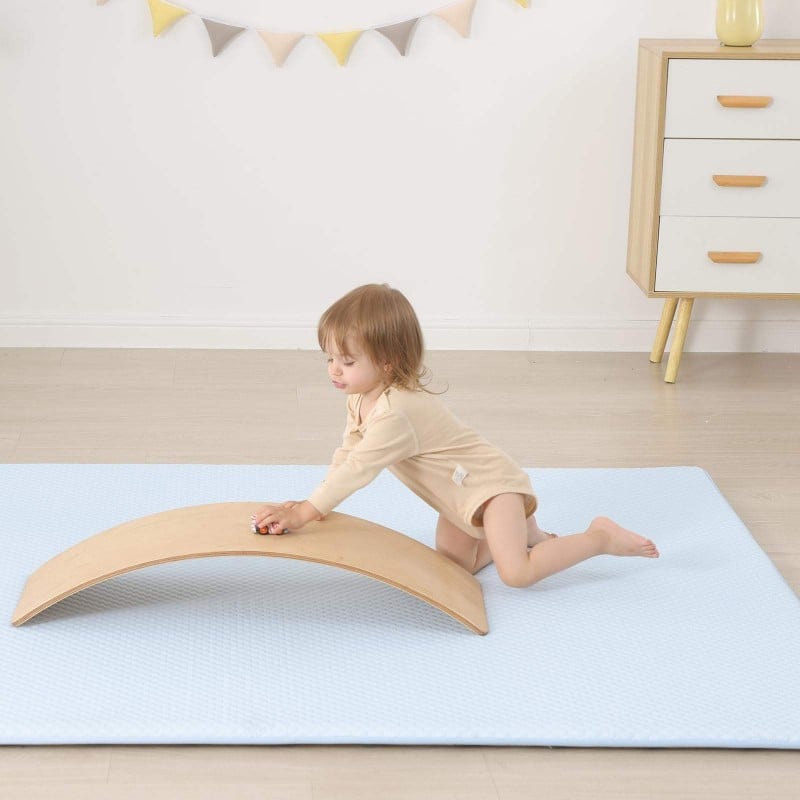
For most babies, a cushioned baby mat between half an inch and one inch thick provides the ideal balance of comfort and support during baby floor play sessions. This thickness range allows infants to develop core strength and motor skills without excessive sinking, which can strain their neck and shoulders. Understanding the role of mat thickness in baby development mat selection ensures your infant gets maximum benefit from tummy time while remaining safe and comfortable throughout each session.
The thickness of a tummy time mat affects how your baby's body distributes weight during floor play. When an infant is on their stomach, proper cushioning prevents pressure points on the chest, arms, and face that can cause discomfort or skin irritation. A mat that is too thin transmits the hardness of the floor directly to your baby's body, creating unnecessary discomfort and potentially discouraging longer tummy time sessions. Conversely, excessive thickness causes babies to sink deeply, which can hyperextend their neck as they work to lift their head and look around, potentially straining developing muscles and ligaments.
Research on infant motor development shows that babies benefit most from a firm yet cushioned surface during baby floor play. The ideal easy clean baby mat should provide enough give to be comfortable but enough stability to allow your baby to push against the surface effectively. This combination helps infants build the shoulder, arm, and neck strength necessary for rolling over, crawling, and eventual walking. A cushioned baby mat with the right firmness supports natural movement patterns and encourages longer, more productive tummy time sessions.
As your baby grows and develops, their tummy time mat requirements change subtly. Newborns and very young infants benefit from slightly more cushioning because their neck muscles are delicate and their skeletal system is still forming. By three to six months, when babies are actively working on head control and beginning to roll, a medium-thickness mat of approximately three-quarters of an inch provides optimal support for baby development mat activities. Older infants who are crawling or preparing to crawl benefit from a firmer surface that resists compression, supporting their increased strength and weight.
The progression of thickness needs reflects your baby's evolving physical capabilities during baby floor play. Very thin mats may work temporarily for newborns who sleep during tummy time, but as babies become more alert and mobile, they require increasingly supportive surfaces to prevent fatigue and strain. Choosing an easy clean baby mat that can adapt to your growing baby's changing needs ensures value and long-term usability throughout the first twelve to eighteen months of infancy.
The surface beneath your tummy time mat significantly impacts the required thickness. Hard flooring such as tile, wood, or concrete requires more cushioning because it provides zero natural give or shock absorption. On these surfaces, a mat thickness of three-quarters to one inch ensures adequate protection for baby floor play. If your home has carpeted floors, even a moderate cushioned baby mat thickness of half an inch may suffice because the carpet underneath already provides some impact absorption. Concrete basements or garage playspaces demand thicker mats to protect your baby during extended tummy time sessions.
Climate and room conditions also influence how your baby development mat performs. In cold environments, a thicker easy clean baby mat can provide insulation from cold floor surfaces, keeping your baby warmer and more comfortable during baby floor play. In warm climates, thickness becomes less critical for temperature regulation, and parents can opt for thinner options that are easier to manage and clean. Understanding your specific floor conditions helps you select the right cushioned baby mat thickness for your household environment.
While optimal thickness for comfort is important, practical considerations like portability and cleaning also influence your choice of tummy time mat. Thicker mats are heavier and more difficult to move between rooms or transport to grandparents' homes or daycare settings. A mat that is half to three-quarters of an inch thick typically represents the sweet spot between comfort and manageability. Easy clean baby mat options with this thickness remain lightweight enough for daily repositioning and travel while still providing adequate cushioning for your baby's needs.
Maintenance becomes easier with appropriately thick mats that are not so heavy they become cumbersome to machine wash or hand clean. Many parents prefer easy clean baby mat materials that allow spot cleaning without complete removal, which favors moderate thickness ranges. A cushioned baby mat that is too thick may require more intensive cleaning methods and may not dry quickly after washing, creating mold or mildew risks in humid climates. Selecting the right thickness ensures that your baby development mat remains hygienic and pleasant to use throughout its lifespan.
Excessive mat thickness can trap heat between your baby and the surface, potentially increasing overheating risk during extended baby floor play sessions. Infants regulate temperature less efficiently than older children, making overheating a genuine safety concern. A tummy time mat with moderate thickness of half to three-quarters of an inch allows adequate air circulation while still providing necessary cushioning. Materials matter equally; a breathable cushioned baby mat prevents heat buildup even with appropriate thickness, whereas nonbreathable materials in thicker configurations can pose overheating risks.
Parents should always monitor their baby during tummy time and watch for signs of overheating such as flushed skin, rapid breathing, or excessive sweating. An easy clean baby mat made from breathable materials ensures that thickness choices support comfort without compromising safety. Synthetic foam mats tend to retain more heat than natural fibers, so the material composition of your baby development mat works alongside thickness to regulate temperature effectively.
Proper spinal alignment during tummy time is essential for healthy development and preventing strain injuries. A mat that is too thick causes excessive spinal flexion as the baby sinks into the surface, potentially straining developing vertebrae and muscles. The ideal tummy time mat thickness keeps the spine relatively neutral and straight, allowing the baby to focus energy on building strength rather than fighting against an unstable surface. This principle guides most pediatric recommendations toward moderate thickness ranges rather than ultra-plush options.
Pediatricians and physical therapists generally recommend that a cushioned baby mat for baby floor play should pass the hand test: when you press your hand firmly into the mat surface, your fingers should sink only partially, not disappear into excessive depth. This simple assessment ensures your baby development mat provides adequate cushioning without compromising structural support. Mats that fail this test are likely too thick and may interfere with proper postural development during critical motor learning periods.
The ideal tummy time mat thickness ranges from half an inch to one inch, depending on your baby's age, the underlying floor surface, and your home environment. For most infants, a cushioned baby mat of approximately three-quarters of an inch thickness provides optimal balance between comfort and postural support during baby floor play. Thinner mats work on carpeted floors, while harder surfaces like tile or wood benefit from the upper end of this range.
Yes, an excessively thick tummy time mat can actually hinder baby development by causing excessive sinking and spinal flexion. When an easy clean baby mat is too thick, babies must work harder to lift their head and look around, potentially straining neck and shoulder muscles rather than building them efficiently. Additionally, overly thick mats trap heat and reduce the tactile feedback babies need for spatial awareness during baby floor play activities.
Mat thickness directly impacts how easy it is to clean and maintain your baby development mat over time. Moderate thickness of half to three-quarters of an inch makes cushioned baby mat options manageable for regular cleaning without becoming excessively heavy or difficult to handle. Thicker mats require more intensive cleaning methods and take longer to dry, potentially creating hygiene problems. Selecting an appropriately thick easy clean baby mat ensures your tummy time mat remains fresh and sanitary throughout its use.

2026/11/02
Struggling to choose the right living room rugs? Avoid costly mistakes with expert insights on size, material, durability, style & care. Get your perfect rug.

2026/11/03
Worried about infant falls during crawling? Discover how cushioned baby play mats absorb impact, and support motor development. Get expert safety tips now.

2026/11/04
Struggling with messy spills and tummy time needs? Discover waterproof, sensory, and tummy-time-optimized play mat surface. Compare materials now.

2026/11/05
Can a kids play mat reduce noise? Discover how thickness, foam density & full coverage deliver real acoustic relief. Get the guide.

2026/11/06
Why do kids slip on tile, laminate & polished wood? Discover how premium non-slip play mats anchor securely AND absorb impact. Boost safety.

2026/11/09
Tired of scrubbing stains and battling odors? Discover the 5 key kids play mat features—waterproof surfaces, washable covers, non-slip grip. See what makes maintenance effortless.

