 EN

What Should Buyers Know Before Ordering Living Room Rugs?
2026/11/02
Struggling to choose the right living room rugs? Avoid costly mistakes with expert insights on size, material, durability, style & care. Get your perfect rug.
Selecting the right kids play mat is one of the most important decisions parents make for their child's development and safety. A kids play mat serves as the foundation for countless hours of play, learning, and physical activity, yet many caregivers choose mats based only on appearance or price rather than the specific activities their children will perform. The right mat directly impacts comfort, injury prevention, developmental progress, and long-term usability across different stages of childhood.
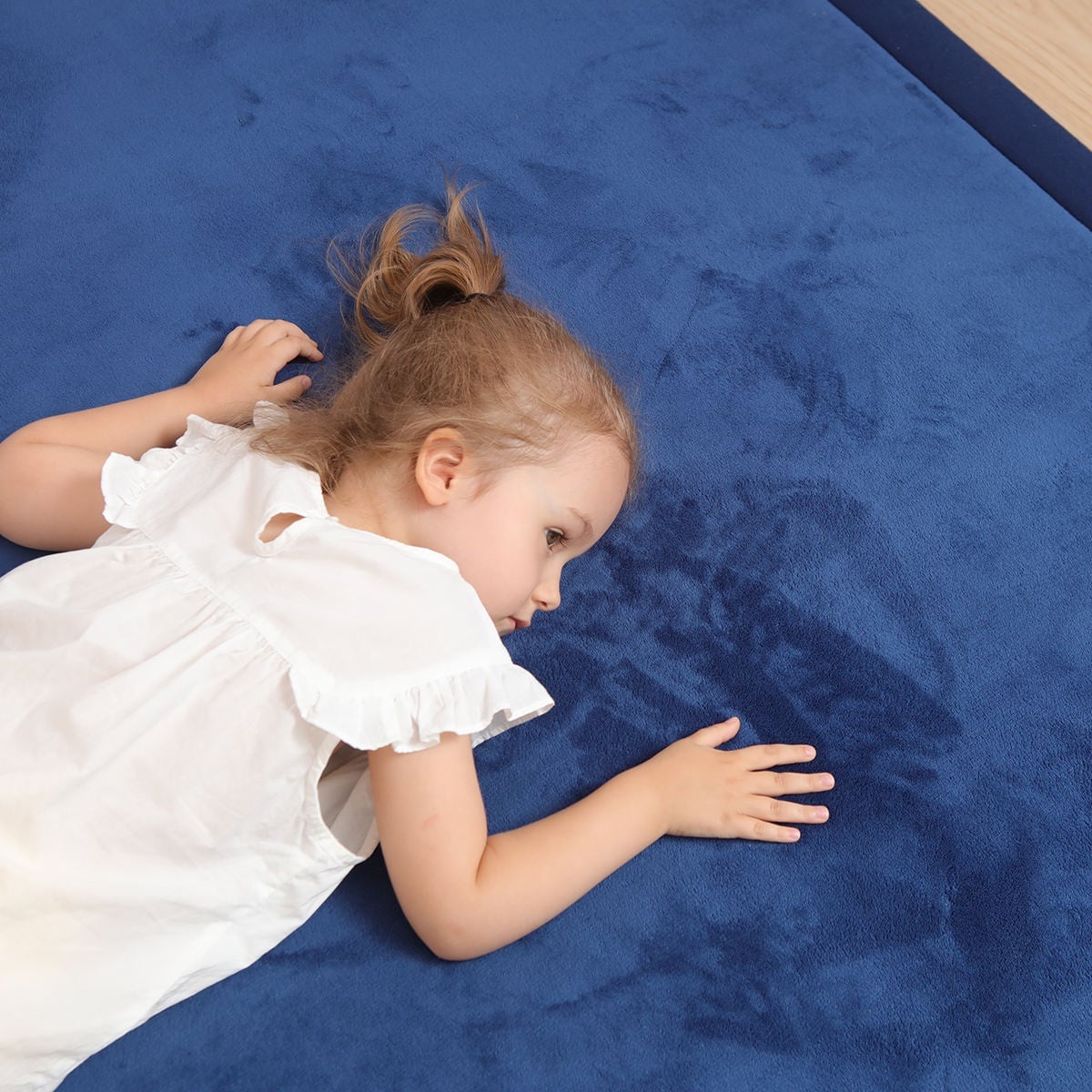
Understanding how to match a kids play mat to your child's specific play style, age group, and activity frequency transforms the mat from a simple floor covering into a strategic investment in your family's wellbeing. Whether your child enjoys tummy time, building activities, active sports play, or quiet learning moments, the thickness, material composition, cushioning, and portability of your chosen mat will determine how effectively it supports those activities. This guide walks you through the essential factors for selecting the ideal kids play mat for every activity in your child's day.
Different activities demand different levels of cushioning in a kids play mat. Tummy time for infants requires thicker foam, typically between 0.5 to 1 inch, to provide adequate joint protection and spinal support as babies develop motor skills. A kids play mat for crawling transitions should maintain that thickness or increase slightly, as the impact forces from repeated movement become more significant. Building and construction play, where children sit and stack blocks, typically requires moderate cushioning of 0.5 inches, since impact forces are minimal but comfort during extended sitting matters for concentration and posture.
When children engage in active jumping, tumbling, or dance activities, a kids play mat needs substantially thicker cushioning, ideally 0.75 to 1.5 inches of high-density foam. These activities generate significant downward force and repetitive impact, creating injury risk if the underlying mat lacks adequate shock absorption. Conversely, a kids play mat for quiet activities like puzzles, reading, or drawing requires lighter cushioning, often 0.25 to 0.5 inches, since the primary function shifts from impact protection to temperature regulation and floor isolation rather than shock absorption.
The material inside your kids play mat directly affects both safety and longevity. High-density, closed-cell foam resists moisture penetration, making the mat easier to clean after spills or accidents, while maintaining structural integrity through repeated use. A quality kids play mat manufactured without phthalates, BPA, or harmful flame retardants protects your child from chemical exposure during extended contact. Many parents overlook the underside material, but a non-slip backing is essential for a kids play mat to remain stable during active play, preventing rolling or shifting that could cause falls.
Surface materials like coral velvet or soft microfiber on a kids play mat create a comfortable, skin-friendly environment while reducing sliding during movement. These materials also regulate temperature more effectively than hard plastic, keeping your child's skin comfortable during extended play sessions. A kids play mat with proper surface treatment resists staining and odor absorption, extending its functional lifespan and maintaining hygiene standards important for families with multiple children or frequent visitors.
Space limitations in modern homes make portability a practical consideration when choosing a kids play mat. Mats that fold into compact configurations allow families to store them easily between uses or transport them for playdates and travel. A lightweight kids play mat that maintains its shape after folding reduces frustration during setup and cleanup routines. Roll-style construction in some kids play mat designs offers better space efficiency than fold-style alternatives, especially for larger mats that might occupy significant closet or storage space.
Selecting the right dimensions for your kids play mat requires balancing activity needs against available space. Smaller mats, approximately 3 by 5 feet, work well for tummy time, puzzles, and seated activities, but larger mats of 5 by 8 feet accommodate crawling, tumbling, and multiple children simultaneously. A kids play mat that's too small frustrates active children and limits developmental progression, while an oversized mat consumes valuable living space. Measuring your intended usage area before purchasing ensures your chosen kids play mat integrates seamlessly into your home's layout without displacing furniture or creating tripping hazards.
For children from birth through 18 months, a kids play mat should prioritize maximum cushioning and support for developmental milestones like tummy time and early crawling. Thicker foam reduces strain on delicate joints and protects developing spines during these critical months. Hypoallergenic, breathable surface materials on a kids play mat prevent overheating and skin irritation during the extended contact time typical of infant play sessions. Parents should verify their kids play mat includes washable covers, since babies frequently spit up, drool, or have diaper incidents on mats.
As children grow into toddler and preschool years, their kids play mat selection shifts toward supporting increased activity variety and physical confidence. A versatile kids play mat accommodates everything from quiet learning games to active climbing and tumbling, requiring balanced thickness and durable surface materials. Colorful designs or pattern elements help define the kids play mat as a distinct play space, supporting children's ability to self-direct activities and maintain focus. Non-toxic materials and secure, non-slip construction become even more critical as children's speed and coordination increase, elevating fall risk when mat stability is compromised.
For tumbling and active play involving jumping or rolling, choose a kids play mat with thickness between 0.75 to 1.5 inches of high-density foam. This depth provides adequate shock absorption to minimize joint stress and reduce impact-related injuries. The exact thickness depends on your child's weight and the intensity of activity, but 1 inch represents a practical middle ground for most households with toddlers and preschoolers.
Select a kids play mat made from non-toxic, closed-cell foam without phthalates, BPA, or harmful flame retardants. The surface should feature hypoallergenic materials like coral velvet or premium microfiber that resist bacterial growth and odor absorption. Verify your kids play mat carries certifications confirming compliance with safety standards, and always confirm the non-slip backing prevents sliding hazards during active play.
Yes, a versatile kids play mat with moderate thickness of 0.5 to 0.75 inches and balanced cushioning effectively serves children from infants through preschoolers, though you may need to add supplementary support for very young infants. A durable kids play mat featuring quality foam composition and proven non-toxic materials adapts well across developmental stages, making it a practical long-term investment for families planning multiple children or extended use.

2026/11/02
Struggling to choose the right living room rugs? Avoid costly mistakes with expert insights on size, material, durability, style & care. Get your perfect rug.

2026/11/03
Worried about infant falls during crawling? Discover how cushioned baby play mats absorb impact, and support motor development. Get expert safety tips now.

2026/11/04
Struggling with messy spills and tummy time needs? Discover waterproof, sensory, and tummy-time-optimized play mat surface. Compare materials now.

2026/11/05
Can a kids play mat reduce noise? Discover how thickness, foam density & full coverage deliver real acoustic relief. Get the guide.

2026/11/06
Why do kids slip on tile, laminate & polished wood? Discover how premium non-slip play mats anchor securely AND absorb impact. Boost safety.

2026/11/09
Tired of scrubbing stains and battling odors? Discover the 5 key kids play mat features—waterproof surfaces, washable covers, non-slip grip. See what makes maintenance effortless.

