 EN

What Should Buyers Know Before Ordering Living Room Rugs?
2026/11/02
Struggling to choose the right living room rugs? Avoid costly mistakes with expert insights on size, material, durability, style & care. Get your perfect rug.
Selecting a safe baby play mat involves understanding the critical safety standards and certifications that protect developing infants. Parents and caregivers must recognize that not all baby play mats are created equal, and the standards governing their production directly impact the health and security of the child using them. A quality baby play mat serves as a protective foundation during tummy time, crawling, and early play, making safety compliance non-negotiable for responsible manufacturers and informed buyers.
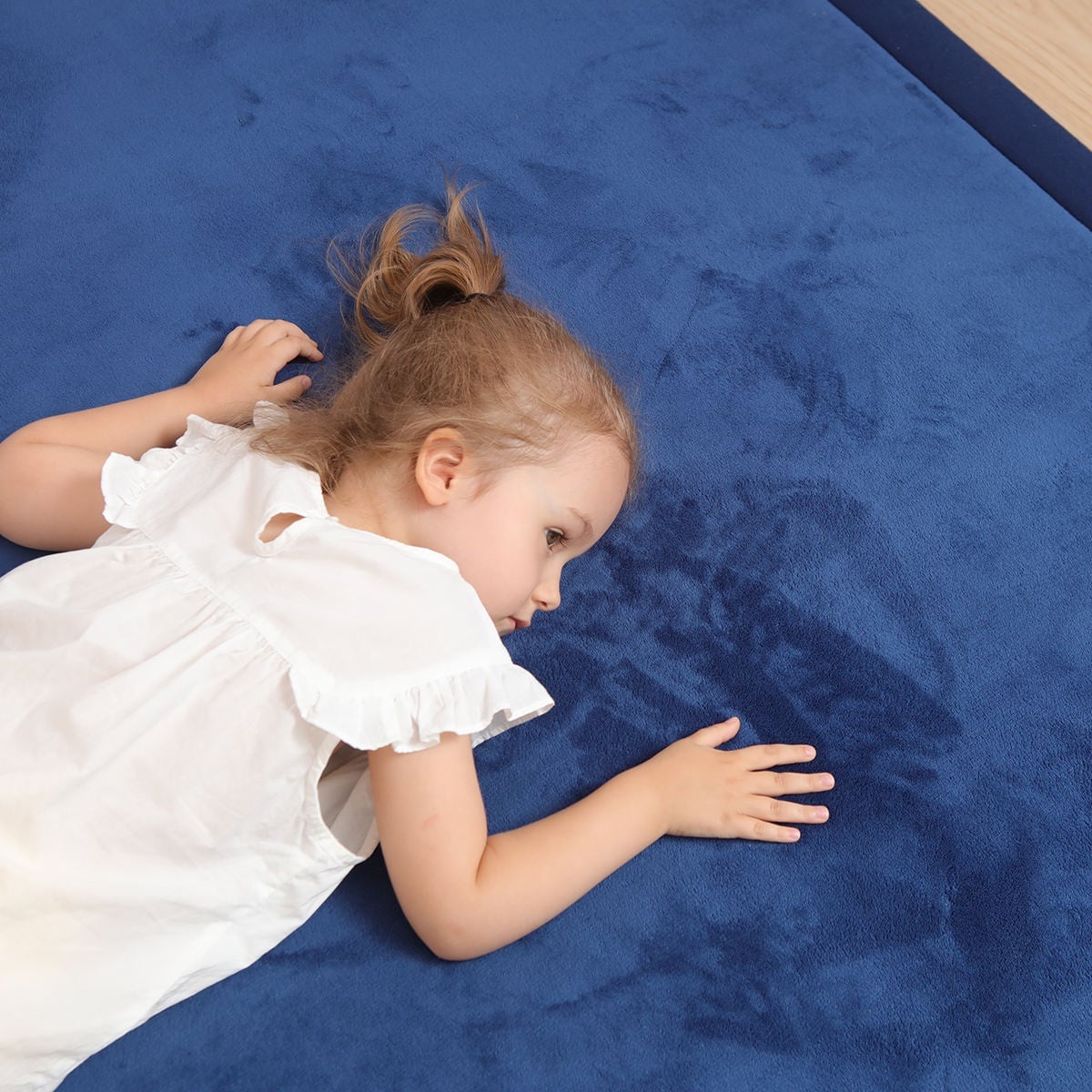
Understanding what makes a baby play mat safe requires familiarity with international regulations, material certifications, and design specifications. Regulatory bodies across different regions have established frameworks to ensure that baby play mat products meet stringent safety benchmarks. These standards address everything from toxic chemical content and flammability to physical hazards and durability, creating a comprehensive approach to child protection.
The materials used in a baby play mat must comply with strict international safety certifications. Most regulatory frameworks prohibit harmful substances such as phthalates, lead, and cadmium that could leach into a child's system through prolonged contact and mouthing behavior. A baby play mat should carry certifications from recognized bodies like CPSC (Consumer Product Safety Commission) in the United States or equivalent European standards that confirm the absence of toxic compounds.
Foam and fabric components must undergo rigorous testing to ensure they do not off-gas harmful chemicals, especially when exposed to warmth or used indoors. Many baby play mat manufacturers now use hypoallergenic, non-toxic materials that meet OEKO-TEX or GOTS (Global Organic Textile Standard) certifications. These certifications verify that every layer of the baby play mat has been tested for restricted substances and is safe for sensitive infant skin.
A baby play mat intended for use by infants under three years should ideally contain only materials that have passed toxicology assessments. Foam core materials must meet flame-retardant standards without relying on chemical treatments that pose health risks. Surface fabrics should be tested for colorfastness to prevent dye migration onto baby's skin during perspiration or moisture exposure.
Adequate cushioning thickness is a fundamental safety requirement for any baby play mat. A baby play mat should typically be between 0.5 to 1 inch thick to provide effective impact absorption during falls while remaining firm enough to prevent sink-in hazards. Insufficient thickness increases injury risk during normal play, while excessive softness may create suffocation concerns or unstable surfaces for crawling infants.
The baby play mat's overall construction must maintain consistent density across its surface to eliminate pressure points and uneven areas that could cause discomfort or instability. Manufacturers must ensure that foam degradation does not occur prematurely, which could compromise the baby play mat's protective function over time. Durability testing helps confirm that the baby play mat retains its structural integrity through normal wear and cleaning cycles.
The surface of a baby play mat should resist excessive fluffing, pilling, or shedding that could create choking hazards for infants who explore objects with their mouths. Edges must be securely sealed and finished to prevent unraveling or creating sharp edges that could cut skin. A properly designed baby play mat includes reinforced stitching and no protruding elements that an infant could catch fingers on or accidentally ingest.
Flammability standards for a baby play mat typically require that materials meet specific ignition resistance benchmarks without chemical flame-retardant treatments. The baby play mat must resist ignition from common household sources and not produce excessive smoke or toxic fumes if exposed to fire. Testing protocols ensure that the baby play mat's materials burn slowly and do not contribute to rapid fire spread, meeting standards such as CPSC 16 CFR 1633 in the United States.
A safe baby play mat must be designed to facilitate regular cleaning without degrading safety performance. The baby play mat should have a non-absorbent or easily cleanable surface that resists bacterial and fungal growth, which is critical given the frequency of contact with an infant's skin and mouth. Regular cleaning compatibility ensures that disinfection procedures do not compromise the baby play mat's material integrity or release harmful residues.
Manufacturers should provide clear care instructions that support hygiene practices without voiding safety certifications. A quality baby play mat remains resistant to odor retention and moisture accumulation, both of which can harbor harmful microorganisms. Compliance with hygiene standards protects the baby play mat from becoming a breeding ground for pathogens that could affect infant respiratory or skin health.
Parents should verify that a baby play mat carries certifications from recognized testing bodies such as CPSC, ASTM International, EN (European Norm), or OEKO-TEX. These certifications confirm that the baby play mat has undergone third-party testing for harmful substances, flammability, and physical safety hazards. A reputable baby play mat will display certification labels or provide documentation verifying that it meets applicable safety standards.
Yes, a baby play mat's firmness directly impacts safety and development. If the baby play mat is too soft, it may increase sink-in and suffocation risks or create an unstable crawling surface. If the baby play mat is too firm, it reduces impact protection during falls. The optimal baby play mat balances adequate cushioning with proper support, typically achieved through mid-range foam density that provides both safety and comfort during developmental play.
A baby play mat should be spot-cleaned regularly and deep-cleaned at least weekly to prevent microbial growth and maintain hygiene safety. Most baby play mat surfaces can be wiped with a damp cloth and mild soap, while some models have removable, washable covers. Parents should follow manufacturer guidelines for cleaning a baby play mat to ensure the process does not damage materials or compromise the certifications the baby play mat originally held.

2026/11/02
Struggling to choose the right living room rugs? Avoid costly mistakes with expert insights on size, material, durability, style & care. Get your perfect rug.

2026/11/03
Worried about infant falls during crawling? Discover how cushioned baby play mats absorb impact, and support motor development. Get expert safety tips now.

2026/11/04
Struggling with messy spills and tummy time needs? Discover waterproof, sensory, and tummy-time-optimized play mat surface. Compare materials now.

2026/11/05
Can a kids play mat reduce noise? Discover how thickness, foam density & full coverage deliver real acoustic relief. Get the guide.

2026/11/06
Why do kids slip on tile, laminate & polished wood? Discover how premium non-slip play mats anchor securely AND absorb impact. Boost safety.

2026/11/09
Tired of scrubbing stains and battling odors? Discover the 5 key kids play mat features—waterproof surfaces, washable covers, non-slip grip. See what makes maintenance effortless.

