 EN

What Should Buyers Know Before Ordering Living Room Rugs?
2026/11/02
Struggling to choose the right living room rugs? Avoid costly mistakes with expert insights on size, material, durability, style & care. Get your perfect rug.
Choosing the right baby play mat size is one of the most important decisions parents make when setting up a safe, comfortable play space. The correct dimensions ensure your infant has enough room to move, develop motor skills, and explore safely without overwhelming your nursery or living area. Size matters significantly because it directly impacts how effectively the play mat contains toys, supports crawling and rolling, and integrates into your home environment.
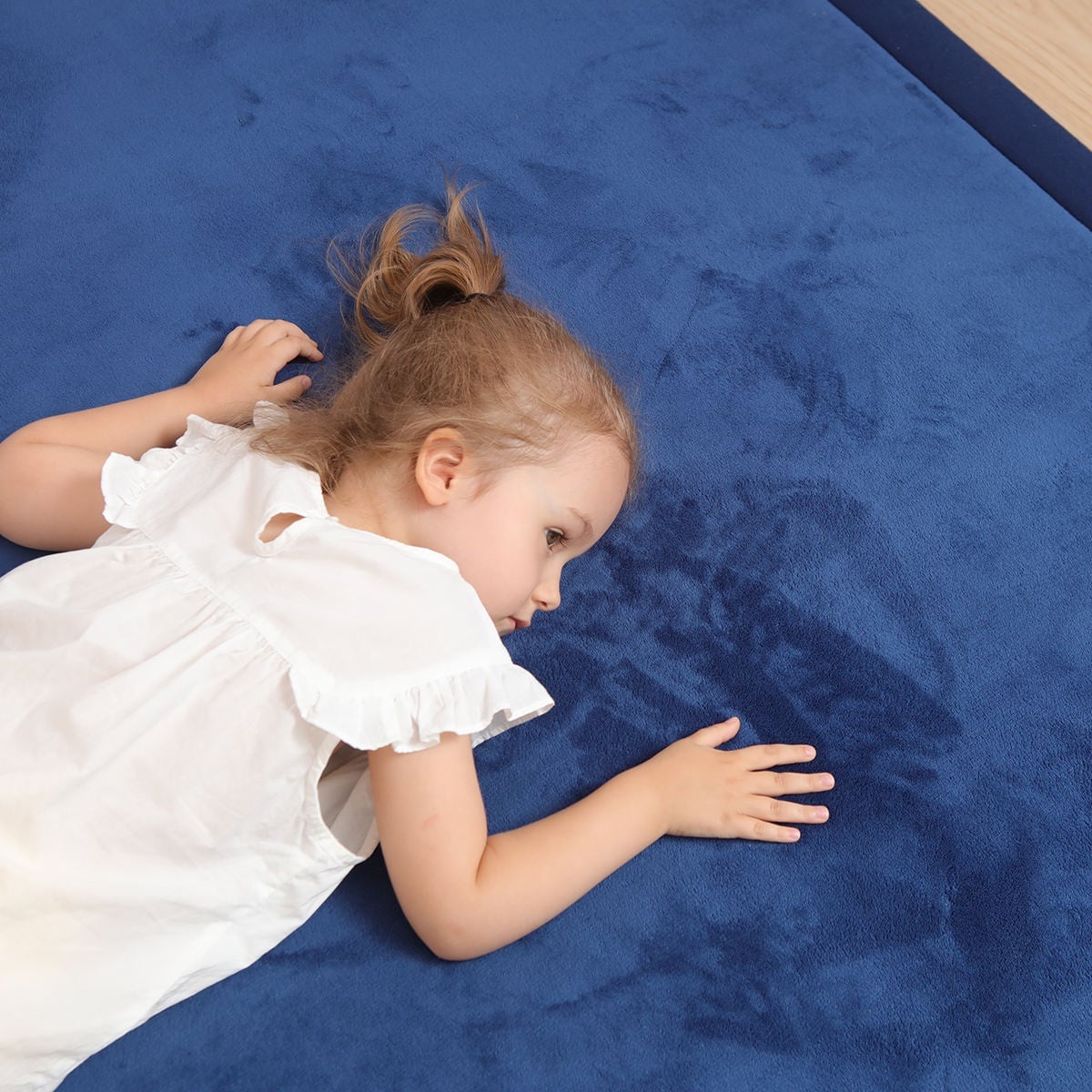
Most parents underestimate how much active space their baby needs for healthy development. A baby play mat that feels spacious enough during selection often proves cramped once your infant starts rolling, crawling, and reaching for toys in multiple directions simultaneously. Understanding the relationship between infant growth stages, available floor space, and play mat dimensions helps you invest in a solution that grows with your child and adapts to your family's lifestyle.
Baby play mats typically come in three primary size categories: small, medium, and large. Small baby play mat models measure around 3 feet by 3 feet, offering compact coverage ideal for apartments or rooms with limited floor space. Medium sizes range from 4 feet by 5 feet to 5 feet by 6 feet, providing balanced space for most households. Large options exceed 6 feet in any dimension, delivering premium coverage for growing toddlers and multiple children playing simultaneously.
The most popular baby play mat size for households is the medium range, which accommodates newborns through toddlers without consuming excessive floor space. These dimensions allow infants to roll side to side without reaching room edges while containing toy scatter effectively. Small baby play mats work well for portable use or temporary setups, while large options suit families with multiple children or spacious playrooms designed for active play environments.
Newborns and young infants benefit from smaller baby play mat sizes because they lack significant mobility and need contained, secure environments. A baby play mat measuring 3 feet by 4 feet provides adequate space for tummy time, assisted positioning, and gentle play without overwhelming young infants. At this stage, babies spend much time in your arms, carriers, or bassinets, so the play mat serves primarily as a dedicated tummy time and visual stimulation station rather than their main activity hub.
Young infants interact more effectively with their parents across smaller baby play mat surfaces because caregivers can easily reach and engage from all sides. The contained space reduces overstimulation while supporting developmental exercises like head lifting, arm coordination, and visual tracking. A compact baby play mat size also simplifies maintenance and allows flexible positioning in various rooms throughout your home during daily routines.
As babies reach four months and begin rolling and reaching for objects, a larger baby play mat size becomes essential for safe exploration. Medium-sized baby play mats measuring approximately 5 feet by 6 feet accommodate rolling movements in multiple directions while keeping babies centered on protective padding. This size range supports the increased motor activity typical of four to eight-month-old infants without feeling restrictive or dangerous for active movement.
Infants at this developmental stage benefit from boundary awareness provided by baby play mat edges, which help contain scattered toys and define their play zone. The baby play mat size should allow at least one full body length of rolling space in each direction plus room for seated toy exploration. Consider upgrading to a medium baby play mat if your infant previously used a smaller model, as developmental needs shift rapidly during this period.
Crawling infants and beginning toddlers require the largest baby play mat sizes to support their expanded mobility and exploratory behavior. Most families find that a baby play mat measuring 6 feet by 8 feet or larger accommodates crawling patterns, standing with support, and multiple toy stations simultaneously. The larger baby play mat size prevents frustration from boundary constraints while reducing the frequency that infants crawl onto uncovered flooring where injuries become more likely.
At this advanced mobility stage, baby play mat size directly impacts how long your child remains engaged and contained within a designated safe zone. Toddlers who feel limited by baby play mat dimensions may habitually crawl off edges seeking additional exploration space. Investing in an appropriately sized baby play mat for this developmental stage supports independent mobility while maintaining parental supervision and safety oversight during active play sessions.
Your room's dimensions, furniture arrangement, and traffic patterns heavily influence which baby play mat size works best for your specific home. Corner placement, under-window positioning, or central room location each suit different baby play mat dimensions. Measure diagonal distances if you plan to position a baby play mat in a room corner, as this affects how much usable space the mat actually provides relative to its stated size dimensions.
Multi-functional rooms shared by multiple family members require thoughtful baby play mat size selection to avoid creating movement obstacles or diminishing available space for other activities. Consider whether your baby play mat will remain permanently positioned or shift locations daily based on family schedules. Permanent installations support larger baby play mat sizes, while temporary setups benefit from medium sizes offering portability and flexible repositioning.
Some families need portable baby play mat options for use at grandparents' homes, daycare facilities, or frequent travel. Smaller baby play mat sizes weighing under 10 pounds travel easily in vehicles or luggage without excessive bulk. Larger baby play mat models sacrifice portability but provide superior play space when positioned permanently in a primary location. Evaluate your lifestyle and travel frequency when deciding between ultimate space and practical transport capability.
Rolling baby play mat models with carrying handles or foldable baby play mats designed for compact storage offer compromise solutions for families wanting substantial space with occasional portability. These innovative baby play mat designs allow you to select larger dimensions while maintaining flexible usage patterns. Consider your realistic transport needs rather than purchasing a baby play mat size you'll rarely move, as larger models generally offer better value and developmental support when used consistently in one location.
Baby play mat pricing correlates directly with size, with larger models representing greater material investment but also extended usable lifespan. A premium-quality larger baby play mat may cost more initially but provides value across multiple children and developmental stages, ultimately outperforming smaller budget options purchased repeatedly. Evaluate total cost-per-use when comparing baby play mat sizes, considering how many months your family will actively use each mat.
Mid-range baby play mat sizes often represent the optimal value proposition for typical families, offering substantial play space without premium pricing. Quality construction and adequate dimensions together determine whether your baby play mat investment delivers years of reliable use or requires replacement within months. Prioritize established brands offering baby play mat products with proven durability rather than selecting based purely on size dimensions or promotional pricing.
Small apartments typically accommodate baby play mats measuring 3 feet by 4 feet or 4 feet by 5 feet without overwhelming limited floor space. These baby play mat dimensions provide adequate room for infant development while leaving circulation space around nursery furniture. If apartment space is extremely limited, a small baby play mat can be positioned temporarily during daily play sessions and removed when not in use, allowing flexible space management throughout your compact home.
Larger baby play mat sizes measuring 6 feet by 8 feet or bigger accommodate multiple children playing simultaneously with reduced interference and conflict. This baby play mat size allows each child designated space for toys and activities while remaining close for parental supervision. Families with multiple infants or combining older toddlers with younger babies benefit significantly from investing in appropriately sized baby play mats that prevent crowding and promote safe, independent play for each child.
Infant development progresses through distinct mobility stages that increase space demands considerably. A newborn may thrive on a small baby play mat, but crawling stage children need medium to large baby play mat sizes for safe exploration. Rather than purchasing multiple baby play mats, consider investing initially in a medium-to-large baby play mat size that grows with your child from newborn through toddler years, ultimately providing better long-term value and consistent play environment continuity.

2026/11/02
Struggling to choose the right living room rugs? Avoid costly mistakes with expert insights on size, material, durability, style & care. Get your perfect rug.

2026/11/03
Worried about infant falls during crawling? Discover how cushioned baby play mats absorb impact, and support motor development. Get expert safety tips now.

2026/11/04
Struggling with messy spills and tummy time needs? Discover waterproof, sensory, and tummy-time-optimized play mat surface. Compare materials now.

2026/11/05
Can a kids play mat reduce noise? Discover how thickness, foam density & full coverage deliver real acoustic relief. Get the guide.

2026/11/06
Why do kids slip on tile, laminate & polished wood? Discover how premium non-slip play mats anchor securely AND absorb impact. Boost safety.

2026/11/09
Tired of scrubbing stains and battling odors? Discover the 5 key kids play mat features—waterproof surfaces, washable covers, non-slip grip. See what makes maintenance effortless.

