 EN

What Should Buyers Know Before Ordering Living Room Rugs?
2026/11/02
Struggling to choose the right living room rugs? Avoid costly mistakes with expert insights on size, material, durability, style & care. Get your perfect rug.
Selecting the right size kids play mat is one of the most important decisions parents and childcare providers make when setting up a safe, functional play space. A well-sized kids play mat not only protects children during play and learning activities but also influences how effectively the playroom functions and how much freedom children have to move and explore. The wrong dimensions can waste valuable floor space, create safety hazards, or leave children cramped and unable to enjoy their play area fully. Understanding the relationship between playroom dimensions and appropriate kids play mat sizing ensures you invest in a mat that truly serves your space and your child's developmental needs.
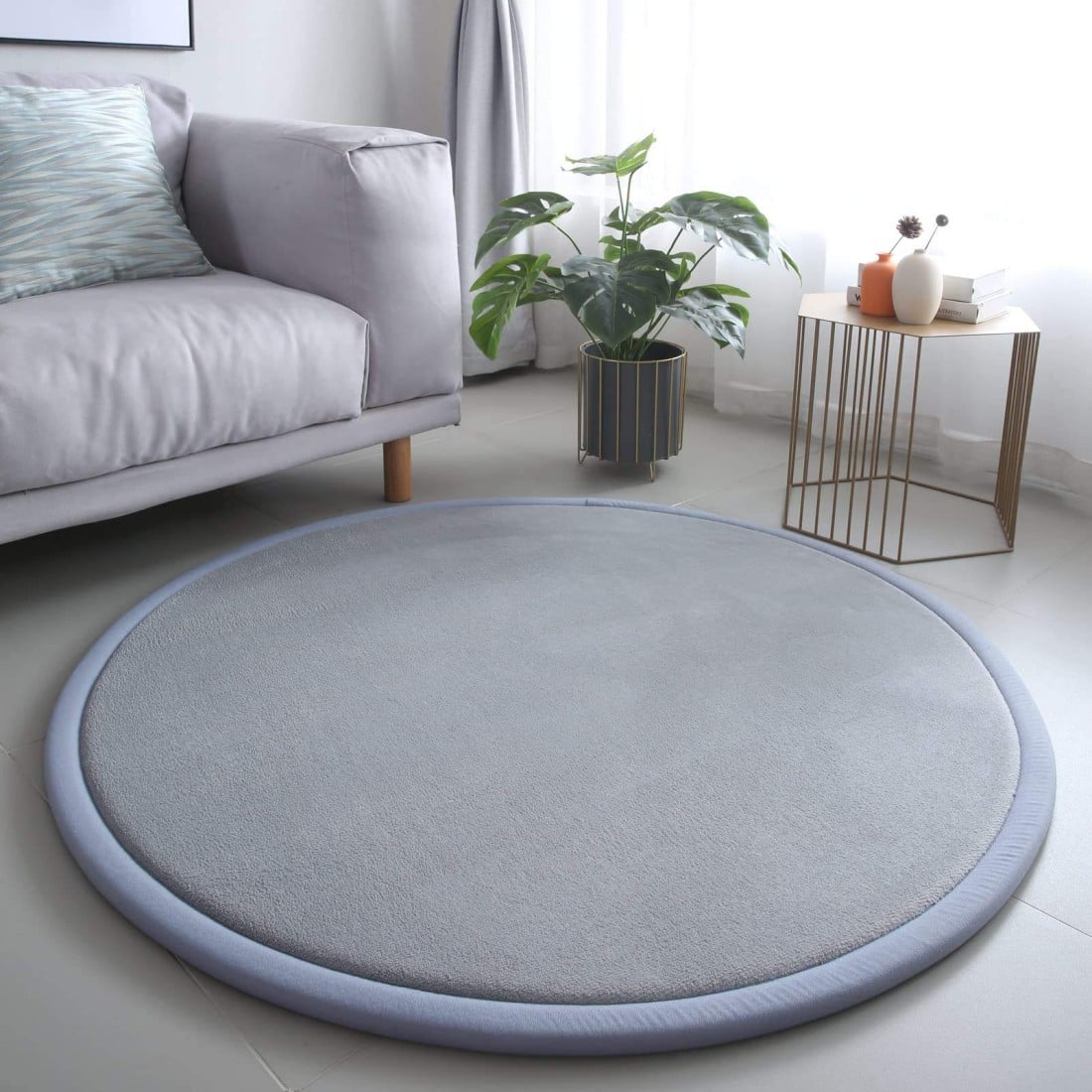
Every playroom presents unique spatial challenges and opportunities. Whether you are furnishing a nursery, daycare facility, classroom, or home playroom, the kids play mat must fit proportionally within the available space while leaving adequate room for furniture, storage, and movement pathways. A mat that is too small can look visually disconnected and may not provide sufficient coverage for activities like tummy time, crawling practice, or group play. Conversely, an oversized kids play mat can overwhelm a small room, restrict access to other play zones, and make the space feel cluttered rather than organized. This guide helps you match kids play mat size to your specific playroom layout, ensuring maximum safety, functionality, and developmental benefit.
Begin by measuring your playroom length and width with a tape measure, and note any permanent fixtures such as doorways, windows, closets, or built-in shelving. Record these measurements in both feet and inches for clarity. Next, identify where key furniture pieces will be positioned, such as toy storage units, changing tables, seating areas, or sleeping cots, as these will reduce the usable floor area available for a kids play mat. Walk through the playroom mentally, visualizing how adults and children will move through the space, and mark out the zone where active play will occur.
Safety considerations directly influence kids play mat size selection. A mat that fills too much of the room can isolate play areas and reduce visibility for supervision. Conversely, a smaller kids play mat leaves open floor space on all sides, allowing caregivers to position themselves strategically and maintain clear sight lines across the entire play zone. Most child safety experts recommend that a mat occupy no more than 60 to 75 percent of available playroom floor space, ensuring adequate surrounding space for caregiver movement and emergency access.
Additionally, consider vertical sight lines from seated positions. If adults will supervise from a chair or standing position, choose a kids play mat size that allows clear visibility of all corners and activity zones on the mat surface. Rooms with alcoves, angled walls, or furniture corners may require smaller or custom-shaped mats to maintain safe sightlines and avoid creating hidden play areas that are difficult to monitor.
Small kids play mat options typically range from 36 inches by 36 inches to 48 inches by 48 inches, making them ideal for compact nurseries, small home playrooms, or office play areas. These dimensions provide focused play zones suitable for infants and very young toddlers engaged in individual or parallel play activities. A small kids play mat fits easily into rooms with limited square footage, such as apartments or home offices, without overwhelming the space. These mats work particularly well in rooms where multiple functional zones coexist, such as a bedroom that doubles as a playroom or a combined living area with diverse activities.
Medium-sized kids play mat dimensions typically fall between 5 feet by 5 feet and 6 feet by 8 feet, offering a versatile middle ground suitable for most home and light-commercial playrooms. The 6-by-8-foot kids play mat accommodates small group play and larger developmental activities like obstacle courses or multi-child games while maintaining manageable dimensions for typical playroom layouts.
Medium kids play mat sizes balance coverage, safety, and room functionality effectively. They provide enough surface area for meaningful play experiences while preserving adequate floor space for adult movement, emergency access, and other room functions. Many parents and child educators choose medium-sized mats as their first kids play mat purchase because these dimensions work across a broad range of playroom sizes and developmental stages.
Large kids play mat options extend from 8 feet by 10 feet to 10 feet by 12 feet or custom dimensions, making them suitable for spacious playrooms, daycare centers, preschool classrooms, and commercial play facilities. These oversized mats transform entire room corners into cohesive play zones while still allowing defined walkways and storage access around the perimeter.
Infants and non-mobile babies require smaller, more focused kids play mat configurations because they remain in localized zones during tummy time and early sensory exploration. A kids play mat measuring 48 inches by 48 inches or 4 feet by 6 feet suffices for individual infant play, providing enough space for tummy time routines, seated activities, and early object exploration without unnecessary bulk. As infants progress to crawling stages around 6 to 9 months, a slightly larger kids play mat in the 5-by-5-foot to 6-by-6-foot range supports emerging mobility while remaining proportional to nursery or home playroom dimensions.
Toddlers aged 1 to 3 years benefit from medium-sized kids play mat dimensions ranging from 5 feet by 5 feet to 6 feet by 8 feet. At this stage, children engage in more complex movement patterns, social play with peers, and structured group activities, all of which demand adequate mat surface area. A kids play mat of this size supports running, jumping, climbing, and cooperative games while still fitting standard playroom floor plans. Preschoolers aged 3 to 5 years may benefit from even larger kids play mat dimensions if space permits, as organized group activities, dance, and movement games require sufficient room for multiple children to participate simultaneously without collision risk or restricted movement.
A kids play mat becomes too small when it visually isolates within the room, fails to accommodate the activities your children typically engage in, or forces children to modify their natural play movements due to space constraints. If infants cannot extend their bodies during tummy time, toddlers cannot crawl or cruise without immediately leaving the mat surface, or group play activities feel crowded or unsafe, the mat size is insufficient. Additionally, if the mat leaves awkward or unusable floor gaps around room edges, it is likely undersized for your playroom's proportions and layout.
Yes, using multiple smaller kids play mats is a practical solution for defining activity zones, creating distinct sensory or play stations, and maintaining flexibility in room layout. Multiple mats allow you to modify configurations as children's needs evolve or as seasonal activities change. However, ensure that mats are placed with adequate spacing to prevent trip hazards, and verify that seams or gaps between mats do not create safety concerns for crawling infants or toddlers prone to stumbling. Some caregivers use connecting mat edges or overlap techniques to create a unified play surface from multiple smaller kids play mats.
For most home playrooms, a medium-sized kids play mat measuring 5 feet by 5 feet to 6 feet by 8 feet offers the optimal balance of coverage, safety, and room functionality. This size range accommodates 2 to 6 children, supports diverse developmental activities, and fits comfortably into typical residential floor plans without overwhelming other room functions or restricting adult movement and supervision. Before purchasing, measure your available playroom space and ensure the selected kids play mat dimensions occupy no more than 60 to 75 percent of total floor area, preserving adequate clearance for caregivers, pathways, and emergency access.

2026/11/02
Struggling to choose the right living room rugs? Avoid costly mistakes with expert insights on size, material, durability, style & care. Get your perfect rug.

2026/11/03
Worried about infant falls during crawling? Discover how cushioned baby play mats absorb impact, and support motor development. Get expert safety tips now.

2026/11/04
Struggling with messy spills and tummy time needs? Discover waterproof, sensory, and tummy-time-optimized play mat surface. Compare materials now.

2026/11/05
Can a kids play mat reduce noise? Discover how thickness, foam density & full coverage deliver real acoustic relief. Get the guide.

2026/11/06
Why do kids slip on tile, laminate & polished wood? Discover how premium non-slip play mats anchor securely AND absorb impact. Boost safety.

2026/11/09
Tired of scrubbing stains and battling odors? Discover the 5 key kids play mat features—waterproof surfaces, washable covers, non-slip grip. See what makes maintenance effortless.

